Tight Curls Hairbrushes: A Textbook of Brushing for Curly, Coily, and Tightly Textured Hair


This article expands on concepts from the broader textbook – “Hairbrushes: The Definitive Encyclopedia of History, Types, Materials, and Functional Systems – A Comprehensive Educational Textbook by Bass Brushes.”
Philosophical and Contextual Framing
Tight curls hair care cannot be taught well if it is treated as a modified version of straight-hair grooming. For too long, mainstream brush education has assumed that brushing is a universal daily act: take the brush, pass it through the hair, smooth the surface, distribute oils, and move on. That assumption breaks down quickly when applied to tightly curled, coily, and closely related textured hair. The structure is different. The pattern behavior is different. The way the hair holds moisture, resists friction, tangles, shrinks, stretches, responds to tension, and receives a brush is different. So the logic of brushing must be different too. Dermatology guidance and review literature on curly and Afro-textured hair repeatedly support this core point: tight curls and coily hair have distinct care mechanics, distinct fragility patterns, and distinct handling needs.
That is why this category exists.
In the Bass system, a brush category is not created because the market wants another label. It is created because a distinct type of hair requires a distinct functional logic. Tight Curls Hairbrushes are not simply “brushes for curls.” They belong to their own educational category because this hair type does not ask the brush to do the same jobs, in the same sequence, under the same conditions, as straighter hair or even looser curl types. Here, a brush may be used to detangle under lubrication, to organize dense sections, to guide stretched styling, to direct a blow-dry, to soothe a set, to fluff a natural shape, or to polish a prepared style. These are not interchangeable actions. They are separate functions, and once they are understood separately, the entire category becomes clearer.
This category also deserves care in the language used to describe it. When women search for guidance in this space, they often search using terms such as tight curls, coily hair, textured hair, natural hair, curly hair, Afro-textured hair, and Black hair. In real life, all of those terms can overlap.
Yet none of them should be used carelessly. Women of full or partial African heritage do not all have the same pattern, density, strand thickness, softness, or shrinkage behavior. Some have tighter visible curls. Some have very compact coils. Some mixed-heritage women may have softer or slightly more elongated curl groupings while still facing many of the same brushing realities: dryness, tangling, fragility under friction, the need for sectioning, and the importance of brush function over brush trend. Review literature on curly fiber morphology supports treating this hair as a spectrum rather than as a single uniform experience.
This means Tight Curls Hairbrushes must be taught not as a beauty trend and not as a niche variation, but as a disciplined brushing system for a distinct hair category. The goal is not to make this hair behave like another type. The goal is to understand what the hair is asking for and answer it with the right brush, in the right state, for the right purpose.
Functional Definition of the Category
Tight Curls Hairbrushes are brushes used on tightly curled, coily, and closely related textured hair patterns where brushing must account for significant curl curvature, interlocking behavior, shrinkage, dryness tendency, mechanical fragility, and strong dependence on timing and preparation. This category includes hair commonly described as tightly curled, coily, natural, textured, Afro-textured, and much of what professional and everyday language refers to as Black hair care.
The category is defined by function, not merely by texture label. A brush belongs in this category when it is used to perform one or more of the following roles within the brushing logic of tight curls hair: detangling damp or wet hair that has been lubricated and divided into sections; organizing and controlling dense sections during styling; directing, stretching, or semi-straightening hair under blow-dry tension; soothing, smoothing, or refining the exterior of a set style; fluffing and expanding natural hair volume without indiscriminate disruption; and polishing a prepared style when the hair has already been detangled and lightly conditioned by the correct state. This functional definition aligns with dermatology guidance that recommends detangling textured or tightly curled hair while damp or wet, with conditioner or leave-in support, while minimizing damaging dry brushing.
This category is not the same as general grooming. It is not built around the assumption that one brush should be passed through dry hair every morning. It is also not the same as broad curly-hair education, because looser curls can sometimes tolerate a wider range of brushing habits that tighter curls and coils cannot. Tight curls hair places more importance on state, sectioning, drag reduction, tool architecture, and force control. That is why the brush must be selected by task.
A central principle of the Bass system becomes especially important here: one brush should not be expected to do everything. A working pin brush is not the same as a finishing boar brush. A fluffing brush is not the same as a polishing brush. A blow-dry directing brush is not the same as a daily grooming brush, even if in some routines the same tool may overlap across more than one role. Tight Curls Hairbrushes therefore must be understood as a system of brush functions rather than a single brush identity.
Biology, Physics, and Brushing Mechanism
The authority of this category begins with hair behavior itself.
Tightly curled and coily hair does not move through space like straight hair. Each strand follows a more curved path, often with multiple bends, loops, or coil structures along its length. That curvature changes the mechanics of brushing at every level. It changes how neighboring hairs wrap around one another. It changes how easily the hair compacts into knots. It changes how force travels through the strand when tension is applied. It changes how the brush enters, how the brush drags, and how quickly a careless pass can turn into breakage. Reviews of curly and Afro-textured hair describe this fiber geometry as mechanically distinct, with special implications for tangling, handling, and shaft fragility.
This is one reason the visual fullness of tight curls hair can be misleading. A dense head of hair can appear strong simply because it looks substantial, but density is not the same as invulnerability. In fact, tightly curled hair can be highly vulnerable to friction, snagging, repeated dry manipulation, and rough detangling. The curve of the strand creates more opportunities for mechanical stress to concentrate. That means the brush must work with the structure of the hair rather than trying to bulldoze through it.
Oil movement is also different. Natural scalp oil begins at the scalp, but in straighter hair it can travel more easily along the shaft through ordinary grooming. In tightly curled and coily hair, the strand’s turns and bends make that journey far less direct. This helps explain why many women with dense or full tight curls still experience dryness, especially through the mid-lengths and ends. It also explains why generic brush advice based on “just brush to distribute oils” is inadequate here.
Oil distribution still matters, but it is not the whole brushing story, and it does not happen the same way across the entire head of hair. The broader dermatology literature on curly and Afro-textured hair consistently describes a higher tendency toward dryness and fragility, which is one reason moisturizing routines and reduced-friction handling are so central.
Shrinkage is another defining behavior. Tight curls and coils can appear much shorter in their natural state than they do when stretched. That shrinkage is not a flaw; it is part of the pattern’s natural life. But it affects brushing because a brush may be entering a compacted shape that contains far more length than the eye first sees. If the brush is forced through that compacted shape without preparation, resistance rises quickly. What appears to be surface thickness is often hidden length folded into itself.
Moisture state changes the mechanism further. Damp or wet hair, when supported by proper slip, allows strands to separate with less friction than resistant dry hair. This is why detangling and working through tight curls hair is so often more successful when the hair has been conditioned, sectioned, and prepared. The brush is not magically gentler; the physical conditions are gentler.
The strands are more willing to part, less likely to scrape against one another, and more responsive to patient progression from the ends upward. This principle is directly echoed in dermatology guidance for curly, coily, and textured hair.
Heat adds another layer. When tight curls hair is being stretched, directed, straightened, or semi-straightened under a blow dryer, the brush becomes part of a mechanical system involving tension, airflow, section control, and proximity to heat. Here, brushing is not merely about separating strands. It is about organizing the hair into a controlled form while managing thermal stress. This is exactly why material choice and brush architecture become so important in this category.
The Functional Brush Map for Tight Curls Hair
Before going further, the system must be stated plainly.
Tight Curls Hairbrushes are best understood through four primary brush roles.
The first is the working pin brush. This is the category’s central brush. It is the brush that performs the greatest share of the real labor in this category. It is the brush that helps enter damp, conditioned hair in sections. It is the brush that helps organize density. It is the brush that supports detangling, section control, and much of the practical labor of styling. When selected properly, this is usually the primary working brush of the category, not a side option.
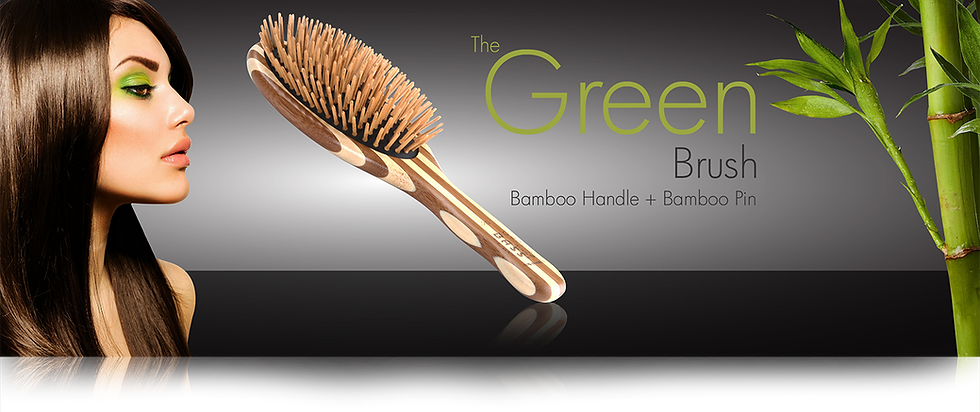
The second is the heat-capable natural pin brush. This is not a separate category in shape so much as a specific performance role within pin brushes. In the Bass system, bamboo and wood pin brushes occupy this position especially well because stylists who work with tight curls hair often need a tool that can help direct, stretch, straighten, or semi-straighten the hair under relatively close dryer work. Here, pin stability, spacing, and durability under heat matter enormously.
The third is the pure boar finishing or fluffing brush. This brush is not the primary detangling brush for tight curls hair. Its role is more refined and more context-specific. It may be used to soothe the surface during a set, to refine an exterior line, or, when the hair is worn natural, to fluff the bulk and help shape the silhouette while still contributing some oil distribution along the accessible portions of the strand. It is a finishing and shaping brush, not a first-entry rescue brush.
The fourth is the porcupine-style boar polishing brush. This is a specialized brush role. It is not a general all-purpose default. It becomes appropriate when the goal is deeper polishing or refinement and when the hair is already well detangled, prepared, and slightly damp. In this state, the brush can help create a more finished surface. Outside that state, it is often misused.
Once these four roles are understood, much confusion disappears. The question is no longer
“What is the best brush for tight curls hair?” The better question becomes “What function am I asking the brush to perform right now?”
Material Science
Materials matter in this category because the demands are specific.
Bamboo and wood pins are especially important in the Bass system for tight curls hair because they offer a rare combination of clarity, firmness, and comfort. Dense curly and coily hair often does not respond well to overly soft, overly flexible pin structures that bend away from the section before truly entering it. A pin that is too yielding may feel gentle at first contact, but if it collapses against the density of the hair, it fails to create organized movement. The result is often more passes, more frustration, and more inconsistent control.
Bamboo and wood pins behave differently. They are more direct. They enter the section with greater stability. They help the brush keep its pathway through dense hair. Yet when the brush is properly designed, that firmness does not translate into harshness. It translates into purposeful contact. This is one reason stylists specializing in tight curls hair have long favored Bass bamboo and wood pin brushes. They are rigid enough to work through substantial density, but comfortable enough to remain practical through repeated section work.
This material logic becomes even more important under heat styling. Tight curls hair that is being stretched, directed, or semi-straightened often requires closer, more deliberate dryer work than other hair types. In that environment, even high-quality nylon pins can degrade over time, warp, or lose performance. Bass has heard for decades from stylists that natural bamboo and wood pins hold up better in this type of repeated close-heat use. That does not mean synthetic pins have no place in the world. It means that in this particular role, natural pins offer a form of durability and consistency that matters deeply.
Boar bristle must be handled with equal precision. In many general brush discussions, boar bristle is framed as if its purpose is always the same: polish, smooth, distribute oils, and create shine. On tight curls hair, boar bristle still has those capacities, but the way they apply changes with the state of the hair. Pure boar can be excellent for soothing and finishing when the hair is being set. It can also be useful when the hair is worn natural and the goal is to fluff the bulk, refine the shape, and bring the style into a fuller, more balanced silhouette. In this context, it is not functioning the way it might on straight hair, where one often wants a deeper, more penetrating pass toward the scalp.
For deeper polishing on tight curls hair, a porcupine-style boar brush becomes more suitable. The mixed structure gives the brush greater reach through prepared hair. But because this reach also increases the possibility of drag, it should be reserved for hair that has already been thoroughly detangled and is very slightly damp. Here, the brush can polish. On resistant, tangled, or dry hair, it can become too aggressive.
The Bass rule remains constant: no material is universally superior. Bamboo and wood pins are not better than all other pins in every brush category. Pure boar is not better than porcupine boar in every finishing scenario. Each material answers a function, and the quality of the answer depends on the role being asked of it.
Design and Construction Logic
This category cannot be taught properly without explaining design.
Pin spacing is one of the most important architectural decisions in a tight curls brush. Dense curly and coily hair does not welcome crowded brush geometry. When pins are packed too closely together, the brush can meet too much resistance too early, especially when the hair is still compact or only partially separated. The brush begins to behave like a wall instead of a pathway.
Wider spacing allows the brush to enter dense sections more clearly and with less unnecessary confrontation.
Pin firmness matters for the same reason. In many categories, softness is assumed to equal gentleness. But on tight curls hair, excessive flexibility can be a hidden weakness. If the pins bend away from the section, the brush fails to create organized movement. The user then compensates with more force or more passes. A firmer pin often performs more gently in practice because it does its job cleanly the first time. This is where Bass bamboo and wood pins are especially well matched to the category. Their firmness supports entry, section control, and directional styling without requiring the brush to be overworked.
Brush head size also matters. A very large head may seem efficient, but dense tightly textured hair often responds better when sections are controlled more deliberately. A smaller or more moderate working surface can help the user keep contact within the intended section rather than disturbing neighboring hair. This becomes especially relevant in detangling, styling prep, and precision blow-dry work.
Cushion behavior changes the feel of the brush as well. A brush with some give in the bed can create comfort and help moderate pressure. But too much softness may reduce control when the hair is especially dense or compact. Conversely, a more direct-set construction may create stronger contact and clearer tension, which can be valuable in some styling scenarios. Neither is universally right. The question is always how the structure participates in the intended function.
Boar brush design has its own logic. A pure boar brush presents a more continuous surface response and can be ideal for soothing, surface refinement, and gentle shape work. A porcupine-style brush introduces a deeper reach, which can be useful for polishing a prepared style, but only when the hair state makes that reach safe. Even handle design matters more than people assume.
Tight curls routines are often section-heavy and time-intensive. A brush that sits well in the hand, changes angle easily, and remains comfortable over repeated passes is not a luxury. It is part of the tool’s real performance.
Good brush design in this category never exists for appearance alone. Every element of spacing, firmness, size, bed response, and handle construction is part of how the brush meets the realities of textured hair.
Technique and Use
This is the heart of the category.
A brush should never be introduced into tight curls hair as a blunt act of force. It should be introduced as part of a controlled sequence. The hair must first be evaluated by state. Is it damp or dry? Lubricated or resistant? Natural and compact, or stretched and sectioned? Being detangled, directed, set, fluffed, or polished? The brush can only be used correctly once the state is understood.
Wet or Damp Detangling State
For most women with tight curls or coils, the most important brush use begins with damp or wet hair that has been conditioned or otherwise given enough slip to reduce drag. The hair should be divided into manageable sections. Each section should be held in a way that protects the root area from unnecessary pulling while the brush begins lower on the length, working through ends first and gradually moving upward. This is strongly aligned with dermatology guidance for curly, coily, and textured hair, which recommends wet or damp detangling with leave-in or conditioning support and warns against routine dry brushing because of breakage and frizz.
In this state, the working pin brush is usually the primary brush. The objective is not speed. The objective is separation with control. The brush should help the fibers part from one another. It should not be asked to rip through compaction. If the section resists strongly, the answer is not more aggression. The answer is more preparation, smaller sectioning, more patient progression, or better distribution of conditioning support.
This is one of the most important truths in the entire category: density should never be mistaken for permission to use force. Tight curls hair can be very full and still be highly vulnerable to breakage.
A correct detangling brush is defined not by how much punishment it can withstand, but by how effectively it can reduce struggle.
A finishing brush is not a first-entry detangling brush. A polishing brush is not a rescue tool. This category becomes much safer the moment those two errors are removed.
Prepared Styling State
Once the hair has been detangled, the pin brush may continue serving as a section-control tool. In many routines, the brush becomes the instrument that helps align the hair for twists, braid sections, blow-dry prep, wig prep, protective style preparation, or other transitions in the routine. Here, the purpose is no longer only removing tangles. It is organizing the hair into a usable state.
The brush must move with enough firmness to gather the section cleanly without collapsing under density. Again, this is why well-spaced bamboo or wood pins perform so well in the Bass system. They can move through the section with clarity. They create order. They do not simply skate over the surface.
Heat-Directed Stretching and Blow-Dry State
When tight curls hair is being stretched, directed, or straightened under heat, the brush enters a very different role. It is no longer simply helping separate strands. It is now working with airflow, directional tension, and heat exposure. The section is held in a more intentional line. The brush must remain stable enough to support that line. The pins must retain performance as the dryer works close to the brush path.
This is where natural pin construction becomes especially valuable. Stylists who specialize in tight curls hair have relied on Bass bamboo and wood pin brushes for decades because this type of hair often requires a more deliberate and closer heat relationship than looser patterns do. The brush must not soften, warp, or lose discipline under that repeated thermal demand. It must continue to guide the section with confidence.
The goal here is not to overstate what a brush can do. The brush does not eliminate heat damage. Any heat styling must be handled carefully, and dermatologists consistently advise minimizing frequent high-heat exposure and reducing tension-heavy practices that can contribute to damage over time. But within the Bass system, natural pin brushes are particularly well suited to this role because they help withstand the realities of textured blow-dry work better than many synthetic alternatives.
A blow-dry directing brush is not automatically the same thing as a daily grooming brush. In this category, that distinction matters.
Natural Shape and Fluffing State
When the hair is worn natural, brushing does not always mean detangling and it certainly should not automatically mean dragging a tool through the entire head in the dry state. Yet there are valid brush uses in natural hair shaping.
One of the most important is controlled fluffing. In the Bass system, a pure boar brush can help expand the bulk of natural hair, refine the outer shape, and bring balance to the silhouette. The brush here is not being used to plow down into the roots in the way that straighter hair often requires for oil distribution. Instead, it is helping lift, guide, and soften the visible form of the style.
The movement is more selective. The intention is to create fullness and refinement rather than collapse the pattern into strain.
This is a major distinction in the category. On straight hair, one often needs a porcupine-style boar brush to reach inward through the layers. On tight curls hair worn natural, pure boar may be used instead for a gentler fluffing and shaping function because the goal is different.
A natural fluffing brush is not intended to drive aggressively into resistant dry coils. Its role is shaping, not fighting.
Set and Finish State
Tight curls hair that has been set into a directed style, molded style, or refined finish often benefits from a different brush mood altogether. Here, the brush is asked to soothe. It is asked to help the hair settle, align, and calm visually. The pure boar brush can be especially valuable in this role. Its contact is smoother and more continuous. It can help refine the surface and support a polished finish without behaving like a detangling tool.
This is where many people misuse the category. They assume that a brush which smooths well must also be the brush that detangles well. That is not true here. A brush may be excellent for finishing and completely wrong for initial detangling. Tight Curls Hairbrushes only make sense when each brush is kept inside its role.
Polishing State
Polishing is the most specialized of the common brush functions in this category. When a woman wants deeper refinement on a stretched or prepared style, a porcupine-style boar brush may become appropriate. But this should happen only when the hair is already thoroughly detangled and very slightly damp. In this condition, the brush can move through the prepared structure with less resistance and can contribute to a more finished, polished appearance.
Without that preparation, polishing becomes dragging. And dragging on tight curls hair quickly turns into breakage, frizz, disruption, and disappointment. The porcupine-style brush should therefore be understood as a prepared-state brush, not a rescue brush and not a shortcut brush.
What Brushing Should Not Try to Do
A pillar on this subject must say this directly: the brush is not meant to compensate for neglected hair state. It is not meant to force through severe dryness, heavy compaction, hardened product buildup, or tangled sections that were never prepared. It is not meant to replace sectioning. It is not meant to replace moisture logic. It is not meant to prove toughness.
The best brushing system for tight curls hair is the one that reduces confrontation. When the brush is repeatedly asked to fight the hair, the problem is usually not the hair. The problem is the sequence.
Adaptation Across the Spectrum of Tight Curls Hair
A useful system must be broad enough to include variation while precise enough to remain truthful.
Some women in this category have patterns that are visibly curled but somewhat more elongated.
In these cases, the working pin brush may appear to travel more freely through the section once the hair has been prepared. Fluffing may also be easier to control because the hair opens more visibly with less compaction. Yet the same woman may still experience dry ends, frizz from poor dry brushing, and the need for thoughtful sectioning.
Other women have denser, more compact coils with stronger shrinkage and more tightly interlocked pattern behavior. Here, smaller sections often become more important. Wider pin spacing becomes more valuable. The brush may need to establish pathway gradually rather than pass deeply all at once. Styling routines may involve more deliberate stretching or blow-dry work simply because the hair holds its compact form more strongly.
Mixed-heritage women with softer tight curls may see a little more movement and a little less compaction than the tightest coily patterns, but that does not place them outside the category when the underlying brushing realities remain similar. They may still need the same sequence logic: preparation, sectioning, state awareness, and functional brush choice.
Strand thickness changes the system too. Fine tightly textured hair can break very easily even though the overall head of hair appears large. Coarse strands may tolerate more direct brush contact, but that should never be confused with permission for rough technique. Density changes the scale of the sections and often the type of brush head size that feels most controllable. Length changes the amount of hidden interlocking. Routine changes everything. Natural wear, stretched wear, twist-outs, braid-outs, blowouts, silk presses, protective styles, wig prep, and takedown all create different brush demands.
This is exactly why Bass organizes brushes by primary function. The system remains stable even as the hair varies, because it is built on what the brush is being asked to do, not on a false promise that every woman in the category needs the exact same tool in the exact same way.
Scalp, Wellness, and Sensory Layer
Hair care is not only visual. It is physical, emotional, and repetitive.
A brush that snags constantly turns routine into stress. A brush that requires force teaches the user to brace. A brush that pulls at the scalp again and again makes maintenance feel punishing. These are not small details. When a woman must repeat a routine week after week, the sensory experience becomes part of whether the routine is sustainable.
This matters especially in tight curls hair because the care process is often more involved than it is for straighter patterns. There may be more sectioning, more moisture management, more deliberate styling, more time with the hands in the hair. A brush that works well in this category reduces conflict inside that longer process. It makes the routine calmer. It makes the scalp feel less assaulted. It makes the hand less tired. It allows brushing to become part of the rhythm of care rather than an interruption of it.
Scalp comfort also intersects with broader health concerns. Dermatology sources note that Black women are disproportionately affected by forms of hair loss such as traction alopecia and central centrifugal cicatricial alopecia, and that repeated pulling, painful styles, persistent scalp irritation, and hair-care practices that increase breakage or tension deserve attention rather than normalization. A correct brushing system is not the entire answer to scalp health, but it is part of a healthier environment because it replaces brute force with sequence, preparation, and functional clarity.
The wellness dimension of the category should never be romanticized, but it should be acknowledged. When the right brush is used for the right role, the act of brushing can become less adversarial. That alone has real value.
Care, Maintenance, and Longevity
A working brush in this category needs real maintenance.
Tight curls routines often involve leave-ins, creams, oils, gels, setting products, and repeated damp use. These realities can create buildup around pins and bristles much faster than in simpler grooming systems. If that buildup is ignored, the brush begins to reintroduce friction into the very category that most needs reduced friction. Residue hardens. The brush loses clarity. Surface smoothness declines. Passes become draggy.
Pins and bristles should therefore be cleaned regularly and thoroughly. Loose hair should be removed before it winds into the base. Product residue should not be allowed to cake around the working surfaces. If the brush is used on damp hair or in wash-day routines, it should be dried properly afterward. A good brush lasts longer when it is treated like a durable instrument rather than a disposable accessory.
This is particularly important with natural pin brushes used in blow-dry work. One of their great advantages in the Bass system is durability under repeated heat-related use, but even durable tools perform best when they are kept clean and dry between sessions. Stewardship matters.
Historical and Cultural Context
This section matters because Tight Curls Hairbrushes did not appear out of nowhere. The need for this category existed long before modern marketing language discovered texture. Women of
African descent have always had hair with its own physical behavior, its own care demands, and its own relationship to grooming, presentation, protection, and identity. The brushing logic did not begin when a brand named it. The logic began because the hair itself required methods that made sense.
That history is not merely cosmetic history. It is cultural history, social history, and in many cases survival history. Scholarly literature on Black hair and health notes that natural or textured hair has long been subject to pressure from Eurocentric beauty standards, social policing, and workplace or school discrimination. More recent health literature also describes hair discrimination as a real social determinant affecting well-being, self-presentation, stress, and daily life. When hair has been judged, disciplined, or misunderstood publicly, everyday care choices become more than technique. They become part of how a woman moves through the world.
This is one reason generic brush education has so often fallen short. It did not simply overlook a texture. It often overlooked a lived reality. Women learned from mothers, grandmothers, sisters, stylists, and community because formal beauty systems did not always teach textured hair with sufficient respect or precision. Even medical literature now acknowledges that Afro-textured hair and the hair practices of Black women require culturally informed understanding and that gaps in understanding can affect health discussions, diagnosis, and care.
Historically, hair practices among women of African descent have included braiding, twisting, sculpting, stretching, wrapping, covering, adorning, and adapting the hair in ways that preserved beauty, practicality, and meaning. The tools used in those practices evolved across geography, migration, labor demands, assimilation pressures, salon innovation, and modern styling technology. But the central truth remained: tightly curled and coily hair required its own logic. It could not be adequately served by straight-hair assumptions.
That history also helps explain why the contemporary natural-hair conversation matters so deeply. It is not merely a preference for one look over another. It is tied to autonomy, professional acceptance, bodily presentation, and relief from older systems that treated textured hair as a problem to erase. Recent literature continues to show that Black women’s hair remains tied to identity, social perception, and emotional life in ways that are historically specific rather than incidental.
Within that long arc, Bass’s historical authority comes from a different place than trend language. It comes from being a brushmaker that has listened for decades to real working stylists, including specialists in tight curls hair, and from recognizing that their repeated observations were not isolated preferences. They were evidence of a category. The value of bamboo and wood pin brushes under dense textured styling, the specialized role of boar bristle in finishing and fluffing, and the need to separate detangling, directing, shaping, and polishing into different brush functions all emerge from long practice. Bass does not become an authority here by claiming ownership of the history. Bass becomes useful by recognizing the history, respecting the hair, and clarifying the brush system honestly.
This is why the historical layer is not decorative. It protects the category from being reduced to trend content. It reminds the reader that Tight Curls Hairbrushes belong to a lineage of real care, real adaptation, and real expertise.
Emotional and Experiential Dimension
Women continue routines not because every step is glamorous, but because some routines make life easier and others make life harder.
When the brushing logic is wrong, tight curls hair can feel confusing. One brush claims to do everything but does almost nothing well. One routine promises smoothness but leaves breakage.
One pass through the hair creates more frizz than order. Over time, that kind of confusion creates fatigue. The woman begins to feel that her hair is difficult when in truth the method may have been wrong from the start.
A correct brushing system removes some of that burden. It tells the truth. It says this brush is for detangling, not polishing. This brush is for finishing, not first entry. This brush is for natural fluffing, not deep penetration. This brush is for heat-directed work because the material and structure can support it. Once those distinctions are clear, the routine stops feeling like guesswork.
That clarity matters emotionally. It lowers the pressure to force the hair into a universal routine. It gives women permission to work with the hair they actually have rather than with the hair the market assumed they should have.
Modern Relevance
This category is more relevant now than ever because modern textured-hair routines are more varied than ever.
Today a woman may wear her hair natural one week, stretched the next, in a protective style the next, and in a heat-directed or set style after that. She may move between wash-and-go routines, twist-outs, blowouts, silk presses, wig prep, braid prep, and style refreshes depending on schedule, weather, occasion, and personal preference. She may also need to balance scalp cleanliness, moisture support, product buildup, styling time, and tension management in a way that feels realistic rather than idealized. Dermatology guidance increasingly reflects this practical complexity by discussing wash frequency, scalp care, breakage prevention, heat moderation, and tension reduction as interconnected rather than isolated issues.
That variety does not make the category less important. It makes a functional brush system more necessary.
The working pin brush remains essential in wash-day detangling and styling prep. The natural pin brush remains especially important in heat-directed work. The pure boar brush remains useful in finishing and fluffing. The porcupine-style boar brush remains valuable in prepared-state polishing.
Ancient brushing questions and modern styling demands meet in the same place: function.
This is why a proper Tight Curls Hairbrushes category still matters in the present. The hair has not stopped being structured the way it is simply because routines have become more modern.
Sustainability and Long-Term Value
Sustainability in the Bass philosophy is not built on slogans. It is built on durability, stewardship, and correct use.
A brush that lasts for years because it was well made, well chosen, and properly maintained is more responsible than a drawer full of poorly understood replacements. A brush that matches the function saves not only money but frustration, breakage, and wasted effort. Long-term value in this category means fewer tools bought out of confusion, fewer tools ruined by misuse, and fewer routines built around trial and error when a system could have brought clarity from the beginning.
This principle applies especially strongly in tight curls hair because the cost of poor tool logic is higher. The wrong brush does not just disappoint aesthetically. It can create drag, stress, breakage, wasted time, and loss of trust in the routine itself. Durability therefore includes not only the life of the object, but the consistency of its usefulness.
Why Bass Brushes Publishes This
Bass publishes this category because real brush education requires saying more than “this is a brush for curls.”
For decades, Bass has heard directly from stylists specializing in tightly curled and coily hair that certain brush characteristics matter deeply in this space: pin firmness, pin spacing, structural clarity, hand comfort, and especially durability under close heat work. Bass bamboo and wood pin brushes have earned lasting respect among these professionals not because of novelty, but because they solve real problems in the salon. They move through dense hair with greater order.
They remain comfortable in use. They hold up under styling conditions that challenge many synthetic alternatives.
Bass also recognizes that boar bristle use in this category cannot be taught by borrowing the logic of straighter hair. Pure boar can soothe and finish a set, and it can also fluff natural hair bulk in a way that is distinct from how boar is often used on straight hair. Porcupine-style boar has a valid place too, but only in prepared-state polishing. These distinctions are not marketing flourishes. They are the substance of honest brush education.
That is why Bass publishes on this subject. Not to flatten the category into a claim, but to clarify the category into a practice.
Synthesis and Lifelong Practice
Tight Curls Hairbrushes should ultimately be understood as part of a lifelong brushing practice for curly, coily, and tightly textured hair.
That practice begins with one act of respect: accepting that this hair does not follow universal brushing rules. From there, clarity grows. The working pin brush becomes the main instrument of detangling and section control. The heat-capable natural pin brush becomes the trusted partner in stretching and blow-dry directing. The pure boar brush becomes the tool of soothing, finishing, and natural fluffing. The porcupine-style boar brush becomes the specialized instrument of polishing, used only when the hair is truly ready for it.
The hair itself changes from woman to woman and from routine to routine. Some patterns are softer, some denser, some more elongated, some more compact. Some routines are natural, some stretched, some set, some polished. But the system holds because it is based on function. It asks what the brush is needed to do. It asks what state the hair is in. It asks whether the sequence supports the outcome.
That is the true foundation of the category.