The K-Beauty Skin Cloth: Woven Nylon for Cleansing and Exfoliation

Updated: Apr 24

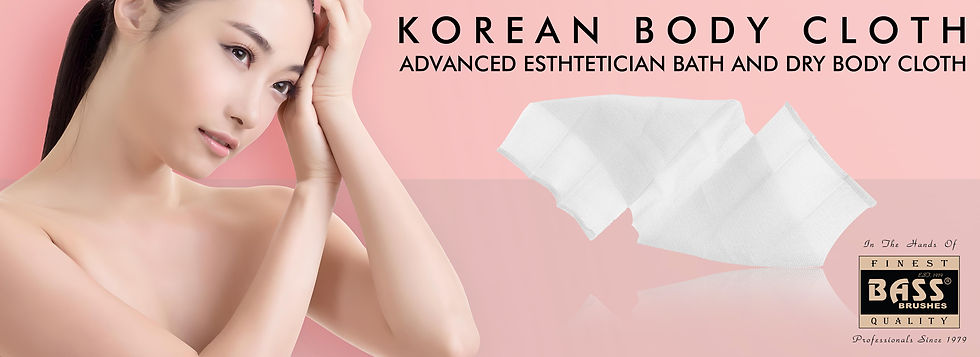
Featured Bass Item: This article examines the Korean Body Cloth by Bass Body, including its woven nylon construction, long-cloth format, wet and dry use, mechanical exfoliation, lathering behavior, pressure, skin sensitivity, and care. |
The Korean Body Cloth is a long, textured nylon cloth designed for body cleansing and mechanical exfoliation. Its defining feature is not a special skin treatment but the interaction between a high-density woven surface, water, cleanser, and controlled friction. The long format also makes it easier to reach the back and shoulders than a small washcloth or mitt.
Key Takeaways
The cloth uses advanced nylon fibers in a textured woven pattern that creates mechanical exfoliation as it moves across the skin.
The weave can generate a rich lather from a relatively small amount of soap or body wash because it holds product, water, and air throughout the cloth surface.
Its classic long-cloth format provides leverage and reach for the back, shoulders, and other areas that can be awkward to wash with a small cloth.
Wet use generally softens the interaction between cloth and skin; dry use creates more direct friction and calls for lighter pressure and shorter contact.
Exfoliation intensity depends on pressure, repetition, skin condition, and frequency. More friction is not automatically more effective.
Rinse the cloth thoroughly after use and allow it to dry fully in open airflow before storage.
What Defines a K-Beauty Skin Cloth
The Korean Body Cloth by Bass Body is built around a long sheet of advanced esthetician-grade nylon fibers woven into a textured pattern. The material is flexible enough to fold, gather, or stretch between the hands, while the surface texture adds friction that a smooth cotton washcloth does not provide.
That friction is what makes the cloth useful for exfoliation. As the fabric moves across the skin, the raised woven texture helps loosen surface debris and shed dead skin cells from the outermost layer of the skin. The effect is mechanical: pressure, number of passes, moisture level, and skin sensitivity all influence how strong the exfoliation feels.
Woven Nylon and Mechanical Exfoliation
Nylon is well suited to this format because the fibers can be woven into a durable, open structure that remains flexible when wet. The cloth can conform to body contours while still producing enough surface resistance to cleanse and exfoliate.
The texture should not be treated as a reason to scrub harder. If repeated passes begin to feel hot, sharp, or irritating, reduce pressure or stop. Mechanical exfoliation can be useful for smoothing rough-feeling surface skin, but excessive friction can also produce redness, tenderness, or irritation.
Why the Cloth Produces So Much Lather
The woven structure creates many small spaces that hold water, cleanser, and air. When the wet cloth is rubbed together or worked over the body, those elements mix through the weave and generate foam. This is why Bass describes the cloth as capable of producing substantial lather from a relatively small amount of soap or body wash.
Lather itself is not the same thing as cleansing power. Its practical value is distribution: foam helps spread cleanser across a larger area and makes it easier to see and feel where product has been worked through the cloth.
Long-Cloth Design and Full-Body Reach
The elongated format changes how the tool can be handled. Held at both ends, the cloth can be moved across the back in a controlled sawing motion without forcing the shoulders into an extreme reach. Folded or gathered in one hand, it can also be used more locally on the arms, legs, torso, elbows, knees, and feet.
The amount of tension placed through the cloth affects how aggressively the texture meets the skin. A tightly stretched cloth can feel more direct; a looser fold generally creates a softer contact. Adjust the grip before increasing pressure.
Wet Use
Wet use is the most straightforward way to combine cleansing and exfoliation. Water softens the cloth and reduces some of the dry friction at the skin surface, while cleanser adds slip and lather.
Wet the cloth thoroughly and add a small amount of soap or body wash.
Work the cloth between the hands to distribute the cleanser and build lather.
Move the cloth over the skin with controlled passes rather than vigorous scrubbing. Use less pressure on sensitive areas and more caution around bony prominences.
Rinse the skin thoroughly, then rinse product and loosened residue from the cloth before drying it.
Dry Use
Bass also positions the cloth for dry use. Without water or cleanser, however, the same woven texture creates more direct friction. Dry use therefore calls for lighter pressure, fewer passes, and close attention to how the skin responds.
Do not use the cloth over broken, sunburned, actively irritated, or inflamed skin. If the surface feels painful or remains unusually red after use, allow the skin to recover rather than repeating the treatment.
Pressure, Frequency, and Skin Sensitivity
There is no single pressure or schedule that is appropriate for every person. Skin thickness, sensitivity, recent shaving, climate, existing dryness, and the use of other exfoliating products can all change tolerance.
Start with moderate-to-light pressure and limited passes. If the skin remains comfortable, frequency can be adjusted gradually. If a routine already includes scrubs, exfoliating acids, retinoids, or other strong resurfacing products, additional mechanical exfoliation may be unnecessary or irritating.
Limits of Mechanical Exfoliation
Mechanical exfoliation can remove loosened surface material and change how smooth the skin feels, but it should not be presented as a treatment for circulation, lymphatic function, acne, keratosis pilaris, or other medical conditions. Likewise, exfoliating before applying lotion may change the feel of the skin surface, but it does not guarantee deeper or medically meaningful product absorption.
Cleaning and Drying
Rinse the cloth thoroughly after each use until visible cleanser and residue are removed.
Gently squeeze or shake out excess water rather than storing it saturated.
Hang or spread the cloth in open airflow so the full surface can dry before the next use.
Replace the cloth if the fibers become damaged, the texture changes substantially, or persistent odor or residue remains after normal cleaning.
A quick-drying nylon tool still requires routine care. Wet use does not make the cloth self-cleaning or guarantee the absence of microorganisms or buildup.
Frequently Asked Questions
What is a Korean body cloth used for?
It is used for body cleansing and mechanical exfoliation. The textured woven surface adds friction while the long format helps reach large or difficult areas such as the back.
What material is the Korean Body Cloth by Bass Body made from?
Bass specifies advanced esthetician-grade nylon fibers arranged in a textured woven pattern.
Why does the cloth create so much lather?
The open weave holds water, cleanser, and air throughout the cloth. Working those elements together generates foam and helps distribute cleanser across the body.
Can the cloth be used on dry skin?
Yes, Bass positions it for wet or dry use. Dry use creates more direct friction, so use lighter pressure and fewer passes than you would during a wet cleanse.
Can it be used every day?
Daily use is not automatically appropriate for everyone. Frequency should be based on pressure, skin sensitivity, other exfoliating products, and how the skin responds after use.
Is it suitable for sensitive skin?
Sensitivity varies. Start gently and reduce pressure or frequency if the cloth causes persistent redness, stinging, or tenderness. Avoid use over irritated or broken skin.
Does the cloth improve circulation or product absorption?
The cloth creates mechanical friction and can leave the skin feeling stimulated, but it should not be treated as a circulation therapy. Exfoliation can change surface texture, but it does not guarantee deeper absorption of lotions or treatments.
How should the cloth be cleaned and dried?
Rinse away cleanser and residue after use, remove excess water, and hang or spread the cloth in open airflow until fully dry before enclosed storage.