Static Control in the Salon: Brush Choices That Actually Help


This article expands on concepts from the broader textbook – “Hairbrushes: The Definitive Encyclopedia of History, Types, Materials, and Functional Systems – A Comprehensive Educational Textbook by Bass Brushes.”
Key Takeaways
• Static in salon environments is influenced by factors such as humidity, hair condition, styling practices, and brush design rather than a single cause.
• Certain brush materials and construction features can help reduce friction during styling, which may contribute to smoother hair movement and less static buildup.
• Hair that is dry, chemically processed, or exposed to low-humidity conditions is often more susceptible to static-related styling challenges.
• Managing static effectively involves combining appropriate brush selection with proper hair preparation, product use, and styling techniques throughout the service.
• Evaluating static issues in context allows professionals to choose tools and workflows that improve manageability while supporting consistent styling results.
Static is one of the most deceptively disruptive problems in salon work. It looks light, almost insubstantial, as though the hair is merely a little airy or flyaway. But once static builds, the service becomes harder to control, harder to polish, and harder to finish cleanly. The section stops behaving like a coherent section. Strands begin separating from one another, lifting away from the surface, and resisting the calm directional control the stylist is trying to create.
That is why static should not be treated as a minor cosmetic annoyance. It is a functional problem. It changes how the hair responds to brushing, how easily the section settles, and how many passes the stylist must make to restore order. In practical terms, static usually builds when the hair is dry, the air is dry, friction is high, and the brush behavior keeps exciting the surface instead of calming it. Once that pattern is in motion, even a technically careful stylist can keep making the problem worse if the brush choice is wrong for the hair state.
This is the real reason static control belongs in serious brush education. The question is not simply which brush claims to be anti-static. The question is which brush behavior reduces unnecessary charge while still organizing the section honestly. A brush can feel refined in the hand and still create more flyaways if the material, contact pattern, and number of passes all work against the condition of the hair.
Static is a charge problem, but in salon work it is usually also a dryness problem
At the most basic level, static appears when electrical charge builds on the hair and the strands begin repelling one another. But in salon work, that charge problem is rarely isolated from the condition of the fiber. Static-prone hair is often also dry hair, under-lubricated hair, weathered hair, or hair sitting in an environment that makes charge easier to build and harder to release.
That matters because dry hair usually has less surface slip. When the surface is less supple and less lubricated, brushing creates more friction. More friction means more opportunity for charge to build. At the same time, dry air and low humidity make that charge harder to dissipate. The result is familiar in salon work: the hair starts lifting, separating, and refusing to settle even though the stylist is trying to smooth it.
This is why static often worsens in winter, under strong indoor heating, or in salon environments where the air feels dry for long stretches of the day. It is also why static often appears most strongly on hair that is already under-conditioned, porous, or stressed by repeated heat and environmental wear. The brush matters, but it does not act alone. Static is often telling the stylist something about the state of the hair as much as about the state of the tool.
Brush choice matters because not all friction behaves the same way
One of the biggest mistakes in static control is thinking of brushing friction as a single uniform thing. It is not. Different brush materials, bristle structures, and contact patterns create different kinds of interaction with the hair.
A more friction-prone brush can build charge quickly on already dry reactive hair, especially if it encourages repeated rough contact across the surface. A calmer brush can still organize the section without creating the same level of electrical disturbance. That is the real distinction the stylist needs to think about. The issue is not simply whether the brush touches the hair. Every brush does.
The issue is how it touches the hair.
When the material and structure encourage the hair to roughen, separate, and recharge with each pass, static tends to escalate. When the material and structure encourage the hair to settle, align, and move with less abrasive interaction, static tends to calm more easily. That difference is not abstract. It becomes visible in the mirror. One section grows more reactive the more it is brushed.
Another becomes more coherent and controlled.
So the first useful rule is this: in static-prone hair, the brush should not merely move through the section. It should move through the section in a way that adds as little unnecessary charge as possible.
High-friction synthetic behavior often makes static worse
This is where more friction-prone synthetic or plastic-heavy brush behavior often becomes a problem. On hair that is already dry and electrically reactive, those tools can keep building the very condition the stylist is trying to remove. The service begins to feel stuck in a loop. The stylist brushes to settle the flyaways, but the brushing itself keeps recharging the hair.
That does not mean every synthetic brush is automatically wrong in every situation. The point is more specific than that. On static-prone hair, especially in the dry finishing stage, a brush that encourages more friction without offering much calming surface behavior can quickly become the wrong tool. The section may look close to finished, but each pass reopens the problem instead of resolving it.
This is why static often becomes most frustrating at the end of the service. The stylist is no longer just organizing or detangling. The goal is polish. If the brush continues to agitate the surface while trying to refine it, the finish starts moving farther away with every attempt to reach it.
A professional should be able to recognize that moment. If the hair becomes more reactive the more carefully it is brushed, the problem may no longer be technique alone. It may be the brush behavior itself.
Smoother natural-bristle behavior often helps because it calms the surface
Brushes that smooth the hair surface more gently and support more even distribution of natural oils often help with static because they do not keep exciting the fiber in the same way. In the Bass system, this is where Shine & Condition logic becomes especially important.
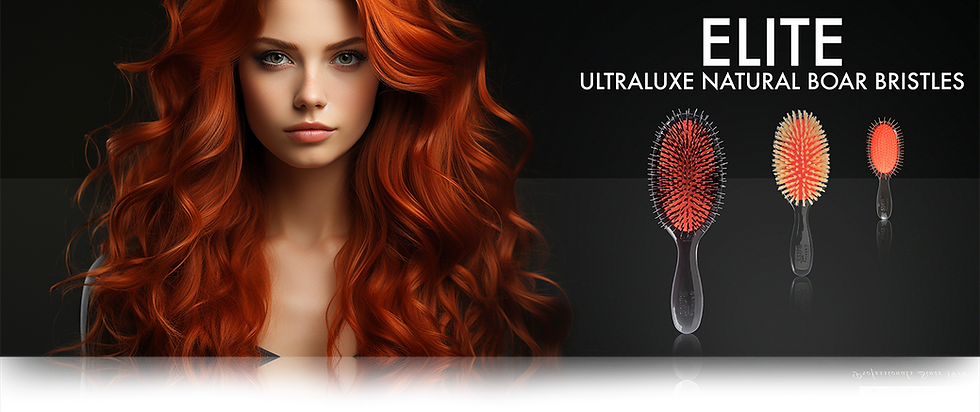
A natural boar bristle field does not behave like a more friction-prone synthetic contact pattern. Its strength is not aggressive opening. Its strength is smoothing, polishing, and helping distribute sebum from nearer the root through the lengths where appropriate. That matters for static because hair that is better aligned and better surface-smoothed tends to look less electrically reactive than hair that is repeatedly roughened and re-separated.
This does not mean every static problem is solved by reaching immediately for the softest natural-bristle brush available. It means a brush that calms the surface rather than exciting it often has the stronger logic in static-prone finishing. When the hair is already detangled and the goal is to reduce flyaways and visual separation, a smoother polishing behavior is often more useful than a more aggressive one.
That is the deeper rule: static control improves when the brush helps the hair hold together visually instead of encouraging it to push away from itself.
The softest brush is not always the best brush for static
This is where salon judgment becomes important. A brush can feel very soft and still be the wrong answer if it collapses into the section, fails to solve it efficiently, and forces the stylist into repeated passes. Static control is not only about gentleness at first contact. It is also about whether the brush can complete the work without repeatedly recharging the hair.
That distinction matters because repetition has its own cost. A very soft brush that requires pass after pass to get the hair under control may produce more total friction than a better-matched brush that solves the section in fewer, cleaner movements. What first feels delicate may become inefficient. And inefficiency on static-prone hair often means more flyaways, not fewer.
So the best static brush is usually not the softest brush in isolation. It is the brush that combines low-friction behavior with efficient passage. It must calm the surface without making the stylist work the section over and over again.
That is one of the reasons static control is a professional rather than purely consumer problem. A salon brush must not only feel good. It must finish the work honestly.
Under-conditioned hair makes brush choice more important, not less
Static control usually gets weaker when the stylist treats the brush as the only variable. Static-prone hair often needs more moisture support, more surface slip, and better conditioning balance. When the hair is porous, weathered, heat-stressed, or simply too dry for the environment it is in, the wrong brush becomes even more disruptive because the fiber has less resilience against friction and charge.
This is why a better brush may improve the service but not solve it completely if the hair remains under-conditioned. The strongest static control usually comes from reading the full system correctly: hair condition, environment, preparation, and brush behavior. If one part of that system is working against the others, the finish becomes harder to stabilize.
In practice, this means that leave-in moisture support, conditioning, and smoothing support often matter alongside brush choice. A static-prone finish rarely improves because the stylist changed one tool while ignoring the dryness that tool is meeting. The brush should be understood as part of the correction, not as the whole correction.
Static often becomes most visible in the dry finishing stage
One reason static is so frustrating is that it often reveals itself most clearly when the service seems close to done. Earlier in the appointment, the hair may still be damp enough, grouped enough, or moving enough that the electrical reactivity is less obvious. But once the hair is fully dry and the stylist asks for polish, the wrong brush behavior becomes much easier to see.
A brush that seemed acceptable during opening or early control may suddenly produce lift, flyaways, and edge separation in the finishing stage. That is not because the brush changed. It is because the stage changed. Dry finishing exposes whether the brush calms the surface or keeps reactivating it.
This is why static control should be thought about stage by stage. An earlier-stage detangling or organizing tool may still be correct when the goal is low-resistance section control. But once the hair is dry and the service asks for refinement, the finishing brush must do something different. It must reduce friction, improve alignment, and stop reopening the section.
That stage awareness is one of the most important professional corrections in static-prone work.
Fewer cleaner passes usually help more than repeated control passes
Static-prone hair often worsens when the stylist keeps brushing in search of a finish that the brush itself is preventing. Each extra pass adds friction. Each extra pass creates another opportunity for the strands to separate, lift, and recharge.
This is where strong professionals separate real control from false control. Real control means the section settles with fewer passes because the brush behavior is appropriate to the task. False control means the stylist keeps brushing because the hair keeps lifting again, and the repeated brushing becomes part of the problem.
This distinction can be uncomfortable because repeated brushing looks diligent. It feels as though the stylist is working harder to refine the result. But on static-prone hair, working harder in that way often means increasing the very condition that keeps ruining the finish.
So one of the strongest working rules is simple: if a brush seems to require endless control passes on dry reactive hair, it may be the wrong brush for that stage.
Earlier-stage detangling logic can help reduce later static
In static-prone hair, especially hair that is also dry or fragile, earlier-stage organization matters.
Hair that is opened calmly and with lower resistance tends to be easier to finish later than hair that has already been overworked before the finishing stage begins.
This is where detangling logic matters. A wide-tooth comb or an appropriate Style & Detangle tool may be more useful earlier in the service than jumping too quickly into a more polishing-oriented brush. The purpose is not to create the final finish. The purpose is to organize the hair without building unnecessary charge before finishing even begins.
If the stylist tries to force polish too early, especially on dry reactive hair, the section may become more electrically active before it is actually ready for refinement. But if the hair is calmly organized first, the later finishing brush has a much better chance of doing its job without reopening the problem.
That is why static control is often strongest when the stylist respects sequence. Open first without overcharging. Then smooth with the appropriate surface behavior. Do not ask one stage to do the work of the other.
Environment matters more than many salons admit
A salon can have a decent brush strategy and still struggle with static if the environment itself is too dry. Low humidity makes electrical charge easier to build and harder to release. In very dry air, hair becomes more reactive, and the same brushing behavior that might be tolerable in one season becomes much more disruptive in another.
This is one reason static often appears as a recurring salon-wide pattern rather than as a problem belonging to only one client. If many people are suddenly showing more flyaways, more reactive finishing, and more resistance to surface settling, the environment may be participating in the problem.
That does not mean the answer is merely environmental. It means static control should not be reduced to a product claim or a brush claim alone. The salon must read the full situation: dry air, dry hair, friction-heavy brush behavior, repeated passes, and insufficient moisture support. Static is rarely mysterious once those elements are seen together.
What actually helps in practice
Brush choices that actually help with static usually share three traits. They lower friction. They smooth the surface instead of roughing it up. And they solve the section in fewer passes.
In practical salon work, this often points toward smoother natural-bristle finishing behavior, lower-friction tools, and calmer earlier-stage detangling logic that keeps the hair from being overworked before finishing. It also points away from repeatedly brushing dry reactive hair with more friction-prone tools while hoping the flyaways will eventually submit.
Just as importantly, what helps is not only the brush itself but the system around it. Better conditioning, more balanced moisture support, and respect for environmental dryness all help the brush succeed. Static control is strongest when the hair is being calmed from more than one direction at once.
What strong professionals actually do
Strong professionals do not treat static as a superficial annoyance. They read it as a friction-and-dryness problem with visible electrical behavior. They reduce unnecessary passes. They choose brush behavior that smooths instead of recharging. They stop expecting a more friction-prone finishing brush to act like a neutral tool on already reactive hair. They improve moisture support where needed. And they pay attention to whether the environment is helping or harming the finish.
Most importantly, they choose tools that calm the hair while solving it. They do not keep charging the section and then hope the products will rescue the result afterward.
Conclusion
Static control in the salon works best when the brush choice matches the real cause of the problem. Static is usually not just a flyaway problem. It is a friction-and-dryness problem made worse by low humidity, under-conditioned hair, repeated passes, and brush behavior that keeps exciting the surface instead of settling it.
That is why the strongest brush choices are usually the ones that lower friction, smooth the surface, reduce repeated passes, and work alongside better moisture support. The broad principle is simple, but it is the right one: the brush should calm the hair, not keep charging it.
Frequently Asked Questions
What kind of brush helps reduce static in hair?
Brushes that create less friction and help smooth the surface usually help most. In finishing work, natural-bristle and other lower-friction smoothing behaviors are often stronger choices than more friction-prone brush behavior.
Do plastic brushes tend to make static worse?
Often they can, especially on dry reactive hair. More friction-prone synthetic behavior can add charge faster than the hair can settle it.
Why is static worse in winter or very dry salons?
Because dry air and low humidity make it easier for electrical charge to build and harder for the hair to release it.
Is static only a brush problem?
No. It is usually a brush-plus-hair-state problem. Dryness, friction, low humidity, and under-conditioned hair all make static more likely.
Can a very soft brush still make static worse?
Yes. If it requires too many repeated passes to solve the section, it can still build friction and increase static even if it feels gentle at first.
What helps besides changing brushes?
Better conditioning, leave-in moisture support, and a less dry environment often help significantly alongside the right brush choice.
Should static-prone hair be brushed less?
Usually it should be brushed more efficiently. Fewer cleaner passes often help more than repeated control brushing.
What is the simplest professional rule for static control?
Choose brush behavior that lowers friction and helps the hair settle instead of tools that keep charging already dry reactive strands.