


Smoothing vs Polishing vs Conditioning: What Boar Bristle Brushes Actually Do


Key Takeaways
· Smoothing, polishing, and conditioning are related boar bristle brush results, but each describes a different function and timeline.
· Smoothing calms the visible hair surface by helping flyaways, fuzz, and scattered strands settle into a more orderly direction.
· Polishing refines how hair reflects light by supporting cuticle alignment and balanced lubrication without creating a heavy coated finish.
· Conditioning happens more gradually as boar bristles help move natural scalp oil from the roots through the lengths.
· Boar bristle brushes work best on dry, detangled hair with light pressure, because they refine and distribute rather than detangle or reshape.
A boar bristle brush can disappoint people for the wrong reasons.
Someone may use it once and think it did very little because it did not glide through knots like a detangling brush. Someone else may brush too aggressively and decide it made the hair flat.
Another person may see oil near the roots and assume the brush made the hair greasy, when the real issue is that oil was not yet being distributed evenly through the lengths. In each case, the problem is not necessarily the brush. It is often a misunderstanding of what kind of result the brush is supposed to create.
The confusion usually comes from three words that are used almost interchangeably in hair care: smoothing, polishing, and conditioning. They sound similar because they often appear together.
Hair that is smoother may look shinier. Hair that is better conditioned may be easier to smooth.
Hair that is polished may feel more refined to the touch. But these are not the same function.
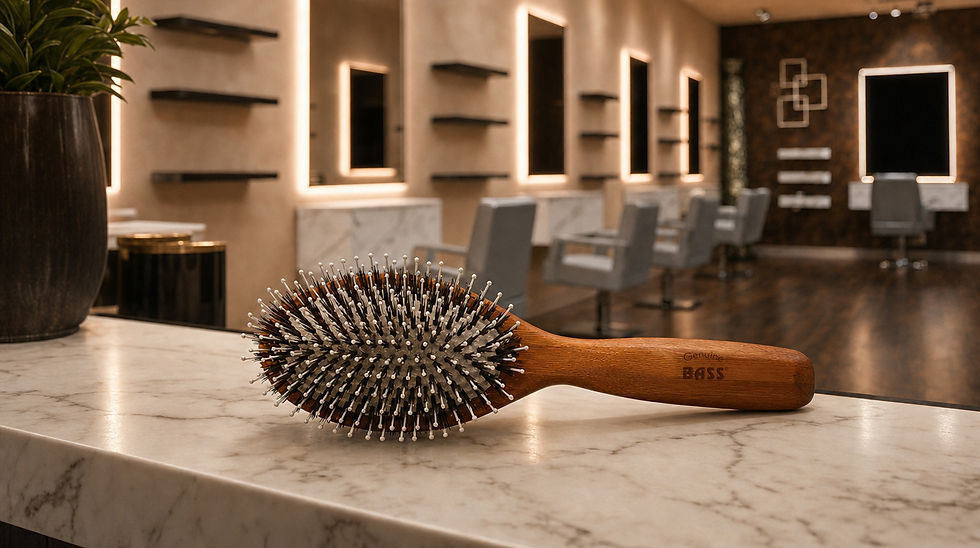
Smoothing is the visible calming of the hair surface. Polishing is the refinement of the hair’s reflective finish. Conditioning is the longer-term movement of natural scalp oils through the hair fiber. A boar bristle brush can support all three, but not in the same way, not on the same timeline, and not through the same mechanism.
This distinction is the key to understanding what boar bristle brushes actually do. They are not primarily detangling tools. They are not shaping tools. They are not designed to force immediate transformation. They belong to the Shine & Condition category because their central purpose is to help the hair surface settle, help the cuticle reflect light more evenly, and help sebum move from the scalp into the lengths where natural lubrication is often missing.
When smoothing, polishing, and conditioning are separated clearly, boar bristle brushing becomes much easier to use correctly — and much easier to judge fairly.
Why Smoothing, Polishing, and Conditioning Get Blurred Together
Hair is usually judged by the way it looks first. If the surface appears calmer, people call it smoother. If it catches light, people call it shiny. If it feels softer, people call it conditioned. In ordinary language, those impressions overlap naturally.
But a brush does not create every visible improvement through the same pathway. A product can make hair look shiny by coating the surface. A round brush can make hair look smooth by stretching it under airflow and tension. A pin brush can make hair easier to manage by separating strands and releasing tangles. A boar bristle brush works differently from all of these.
Its work is not mainly separation, reshaping, or coating. Its work is surface refinement and oil movement. The bristles pass over dry hair with many small points of contact, helping loose fibers lie closer to the main body of the hair. At the same time, the natural bristle surface can pick up small amounts of sebum and carry that oil through the hair shaft. This combination can make the hair look calmer quickly, more polished with proper use, and better conditioned over time.
The mistake is assuming those three outcomes should happen all at once.
Smoothing may appear immediately because the brush can organize the surface in a single session. Polishing may appear once the hair surface is aligned enough and lightly lubricated enough to reflect light more coherently. Conditioning is slower because the hair must receive oil consistently, especially through the mid-lengths and ends. A person who expects conditioning after one pass will miss the value of the tool. A person who expects detangling will judge the brush by the wrong standard.
Boar bristle brushing is best understood as a layered function: first the surface settles, then the finish refines, and over time the hair’s natural conditioning system becomes more evenly supported.
Smoothing: Calming the Surface Without Forcing the Hair
Smoothing is the most immediate and most visible function of a boar bristle brush. It refers to the calming of the outer hair surface: flyaways lie flatter, scattered strands become less noticeable, and the canopy of the hair looks more orderly.
This happens because surface disorder is often a matter of strand direction and friction. Individual hairs lift away from the main body when they are dry, statically charged, bent out of alignment, or rough enough to catch against neighboring strands. When light hits that kind of surface, the eye reads it as frizz, fuzz, or dullness.
A boar bristle brush helps by creating broad, repeated contact across many fibers at once. The bristles do not isolate one knot or one strand the way a detangling tool might. Instead, they move across the surface in a field of contact. As they pass from root toward tip, they encourage lifted fibers to settle in the same general direction as the rest of the hair.
This is why smoothing is not the same as straightening. Straightening changes the visible line or pattern of the hair, usually through heat, tension, or chemical alteration. Smoothing does not need to change the hair’s structure. It simply reduces surface disruption. Wavy hair may remain wavy.
Full hair may remain full. A finished style may remain shaped exactly as it was. The difference is that the surface appears calmer and more intentional.
Smoothing also depends on the condition of the hair before brushing. If the hair is tangled, the brush meets resistance. Resistance causes the user to pull harder. Pulling harder increases friction, raises the risk of cuticle disturbance, and prevents the bristles from moving evenly through the surface. This is why a boar bristle brush should not be asked to solve knots. The hair should be detangled first, then smoothed.
The pressure should also stay light. More force does not create more smoothness. Excessive pressure can flatten the hair, irritate the scalp, and push oil into the roots unevenly. Proper smoothing is controlled, not aggressive. The brush should make enough contact to guide the surface, but not so much that it compresses the hair into a heavy or collapsed shape.
This distinction is especially important for fine hair. Fine hair may respond quickly to smoothing because the strands are light and easy to settle, but it can also look flat if the brush is used with too much pressure or too many passes. The goal is not to press the hair down. The goal is to organize the surface while preserving the natural body that belongs to the hair.
Smoothing is therefore the first result of boar bristle brushing, but it is not the whole result. It calms what the eye sees immediately. Polishing refines what light does next.
Polishing: Creating Reflection Without Weight
Polishing is often mistaken for shine, but it is more precise than that. Polishing is the process of refining the hair surface so it reflects light more cleanly. It is not just making the hair glossy. It is helping the hair look finished without looking coated.
Hair shine depends heavily on the cuticle, the outer layer of overlapping scales that covers each strand. When the cuticle lies relatively flat, the surface behaves more like a smooth reflective plane. Light can travel across it in a more coherent way, creating the visible sheen people associate with healthy-looking hair. When the cuticle is lifted, chipped, dry, or irregular, light scatters in different directions. The hair may look matte, fuzzy, or uneven even when it is clean.
Boar bristle polishing works through alignment and lubrication together.
Alignment comes from direction. Brushing from root toward tip follows the natural orientation of the cuticle. Repeated strokes encourage fibers to lie in a more uniform pattern, reducing the scattered arrangement that breaks up reflection.
Lubrication comes from sebum. Even a small amount of natural oil can reduce dry friction along the cuticle. When the surface is lightly lubricated, strands slide against one another with less roughness. The cuticle is less likely to catch, lift, or create the textured surface that dulls reflection.
This is where polishing differs from simply applying a shine product. A product can make hair look shinier by leaving a reflective film on the surface. That may be useful for certain styling needs, but the shine is dependent on the coating. Boar bristle polishing is different because it works with the hair’s own surface behavior. The brush is not trying to cover dullness. It is helping the conditions that make the hair reflect light more naturally.
The best polishing result is shine without weight. Hair should look more refined, not greasy. It should catch light more evenly without appearing wet, slick, or collapsed. This is the difference between balanced polish and oil overload.
That balance depends on distribution. Oil that remains concentrated at the scalp can look greasy.
Oil moved lightly through the lengths can look polished. The same natural material can create two very different visual outcomes depending on where it sits and how evenly it is spread.
This is why people sometimes misunderstand the early stage of boar bristle brushing. If the scalp has excess oil and the lengths are dry, the first few sessions may reveal the imbalance rather than solve it immediately. The brush begins moving oil, but the hair may not yet be receiving it evenly.
With correct pressure, sectioning, and consistency, the goal is to move from root concentration toward balanced lubrication.
Polishing is the visible middle layer of the process. It is more refined than smoothing, but it is supported by conditioning.
Conditioning: Moving Sebum Where the Hair Needs It
Conditioning is the deepest function of boar bristle brushing because it is not merely visual. It changes the lubrication pattern of the hair over time.
The scalp produces sebum, a natural oil intended to protect the scalp and hair fiber. But sebum begins at the roots. It does not automatically travel to the ends, especially on longer, thicker, wavy, curly, or coily hair. Frequent washing can remove oil before it has time to move. Dry environments can increase friction before the hair receives enough natural lubrication. Texture can slow oil movement because bends and curves make the path from root to tip less direct.
This is how many people end up with the classic imbalance: oily roots and dry ends. The scalp is producing oil, but the lengths are not being conditioned by it.
A boar bristle brush helps address that imbalance because boar bristle can participate in oil transfer. The bristle surface is not a perfectly smooth synthetic surface. It has a natural structure that can pick up small amounts of oil near the scalp, carry that oil through the brush stroke, and release it gradually along the hair shaft.
That transfer is the conditioning mechanism. The brush does not simply smear oil across the top of the hair. When used properly, it moves small amounts of oil through repeated contact. Each stroke contributes a little. The effect accumulates.
This is also why conditioning through boar bristle brushing takes time. A dry end that has gone weeks, months, or years without consistent natural oil distribution will not become supple in one session. The cuticle has been living in a high-friction environment. Strands have been rubbing against one another without enough lubrication. The hair may be accustomed to external products doing the visible work. Natural conditioning must be rebuilt as a pattern.
Over time, better oil distribution reduces friction. Reduced friction helps the cuticle remain calmer. A calmer cuticle reflects light better and feels smoother. The hair becomes easier to manage not because it has been forced into obedience, but because its surface conditions are less dry and reactive.
This is the difference between conditioning and coating. A coating can create immediate slip.
Natural conditioning through brushing creates a more stable relationship between scalp oil and hair length. It is slower, but it supports the hair in a way that becomes more integrated with the routine.
Conditioning is also why dry hair matters. Water-swollen hair is more vulnerable to stretching, and oil does not move efficiently across a water-saturated fiber. Boar bristle brushing belongs on dry hair because dry hair allows the bristles to contact the surface, collect oil, and distribute it with less resistance.
The Timeline: What Happens First, What Builds Later
The clearest way to understand boar bristle brushing is by timeline.
Smoothing can happen in the first session. If the hair is dry and already detangled, the brush can calm flyaways, settle the outer layer, and make the surface appear more controlled almost immediately.
Polishing may appear early, but it becomes more convincing as alignment and light oil distribution improve. Some people see a refined finish right away, especially if their hair already has enough natural oil available at the scalp. Others notice polishing after several uses, once oil begins moving more evenly through the visible surface.
Conditioning develops over repeated use. This is the slowest result because it depends on cumulative oil transfer and reduced friction over time. The hair fiber must receive enough consistent lubrication for the cuticle environment to improve. The ends, especially, may take longer to respond.
This timeline explains why a boar bristle brush can be both immediately useful and long-term in value. It may smooth today, polish as the surface becomes more refined, and condition as the routine continues.
It also explains why overbrushing is not the answer. If conditioning is cumulative, the instinct may be to brush harder or longer to speed up the process. But excessive brushing can create the opposite effect: too much oil near the surface, too much pressure at the scalp, too much flattening on fine hair, or too much disruption on textured hair. Better results come from consistency, not intensity.
A few controlled minutes on a regular basis are more aligned with the tool’s function than a long aggressive session done occasionally.
How Smoothing, Polishing, and Conditioning Reinforce One Another
Although these three functions are distinct, they are not separate compartments. They form a sequence.
Smoothing organizes the hair surface. When lifted strands settle, the hair becomes less visually scattered. That surface order makes polishing possible because light reflects better from aligned fibers than from disorganized ones.
Polishing refines the finish. As the surface becomes more orderly and lightly lubricated, the cuticle reflects light more evenly. The hair begins to look finished without requiring a heavy external layer.
Conditioning improves the underlying surface conditions. As sebum reaches the mid-lengths and ends more consistently, the hair experiences less dry friction. Less friction means fewer lifted cuticle edges, fewer static-prone strands, and less roughness between fibers. That makes smoothing easier the next time and polishing more stable over time.
In other words, smoothing is the visible doorway into the process. Polishing is the refined surface result. Conditioning is the deeper support system that makes the result last.
This is why boar bristle brushing can feel modest in the moment but meaningful over weeks. The brush is not just arranging the hair for a few minutes. It is helping change the conditions under which the hair surface behaves.
A useful practical example is hair that looks puffy after drying. The first brushing may calm the canopy. That is smoothing. As the hair aligns and catches light more evenly, it looks more finished.
That is polishing. As repeated brushing moves natural oil into the drier lengths, the hair becomes less likely to puff and roughen in the first place. That is conditioning.
The same brush is involved in all three, but the visible result deepens as the mechanism progresses.
Why a Boar Bristle Brush Is Not a Detangling or Shaping Tool
Many disappointments with boar bristle brushes come from using them as though they belong to another category.
A detangling brush is designed to separate strands and release knots. It needs enough spacing, flexibility, and structural behavior to move through resistance. A boar bristle brush is denser and more surface-focused. It is meant to work after tangles are removed, not to fight through them.
A round brush is designed to shape hair under airflow and tension. It can create bend, lift, curve, smoothness, or straighter lines during blow-drying. A boar bristle brush can refine the finish after styling, but it is not the main tool for building shape.
This category discipline matters because each tool has a different relationship to the hair. A detangling tool separates. A shaping tool forms. A boar bristle brush refines and distributes. When the wrong job is assigned to the brush, the result feels poor even if the brush itself is performing correctly.
The correct sequence is simple: detangle first, style if needed, then use boar bristle brushing for smoothing, polishing, and conditioning support. In a minimal routine, detangling may happen with fingers or a wide-tooth comb before the boar bristle brush is used. In a more styled routine, the boar brush may function as the finishing and maintenance tool after other steps have done their work.
This preserves the tool’s strength. A boar bristle brush is at its best when the hair is ready for refinement, not when it is still resisting separation.
Why Some Hair Looks Greasy Instead of Polished
One of the most common concerns is that a boar bristle brush can make hair look greasy. This can happen, but it is usually a sign of imbalance, misuse, buildup, or mismatch rather than an unavoidable result.
Greasy hair is often oil in the wrong concentration. If sebum remains mostly at the roots, the scalp area looks heavy while the lengths remain dry. A boar bristle brush is meant to move that oil outward, but the process must be gradual and controlled. Too many strokes, too much pressure, or too dense a bristle field on very fine hair can move more oil than the hair can visually absorb.
Buildup can also distort the result. If the brush is carrying old oil, dust, styling residue, or dry shampoo, it may redeposit residue instead of helping distribute fresh sebum. A brush that is not cleaned properly can make hair feel dull or coated even when the technique is otherwise correct.
Hair type also matters. Fine hair shows oil quickly because each strand has less diameter and less visual mass. Thick hair may require sectioning because the top layer can become polished while the underlayers remain dry. Wavy and curly hair may need less frequent full brushing because the goal may be surface refinement or pre-wash distribution rather than daily root-to-tip smoothing.
The goal is not to remove oil from the system. The goal is to place oil where it is useful. Polished hair has balanced lubrication. Greasy hair has concentrated or excessive lubrication. A good boar bristle routine learns the difference.
How Hair Type Changes the Three Outcomes
Different hair types experience smoothing, polishing, and conditioning at different speeds.
Fine hair often experiences smoothing first. Because the strands are light, the brush can calm the surface quickly. Polishing can also appear quickly, but fine hair has a smaller margin between polished and oily. Light pressure, fewer strokes, and careful brush selection matter.
Medium hair often experiences the most balanced version of all three effects. It usually has enough body to receive oil without collapsing and enough manageability for the brush to move through the hair easily. Smoothing, polishing, and conditioning can develop together with regular use.
Thick hair may experience smoothing mostly on the outer layer unless the hair is sectioned. The conditioning function can be highly valuable, but only if the bristles reach the scalp and oil is moved through more than the visible canopy. For thick hair, the main technique issue is coverage.
Straight hair often shows oil movement more readily because sebum can travel along a direct path. This can make polishing visible sooner, but it can also make overbrushing more obvious.
Wavy hair may show beautiful polishing when the surface is brushed lightly, but too much brushing can soften wave definition. The best use may be strategic rather than constant: before washing, before bed, or as a final surface-refinement step.
Curly and coily hair require the most careful adaptation. These textures often need natural oil distribution the most because sebum has difficulty traveling along bends and coils. At the same time, brushing through defined curls can disrupt pattern and volume. For this reason, boar bristle brushing may be most useful on stretched hair, loosely gathered hair, pre-wash hair, or specific surface areas that need refinement.
The function does not change. The expression changes. Every hair type can be understood through the same three questions: What needs to be smoothed now? What kind of polish is appropriate without weight? How can natural conditioning be supported without disrupting the hair’s structure?
Technique: How to Use the Brush for the Right Result
Because smoothing, polishing, and conditioning are different effects, technique should be intentional.
For smoothing, the brush should pass lightly over dry, detangled hair in controlled strokes. The focus is the outer surface. The goal is to settle flyaways and align the canopy without pressing the style flat.
For polishing, strokes should move from root toward tip, following the direction of the cuticle. The brush should make enough contact to refine the surface and move a small amount of oil, but not so much pressure that the hair becomes heavy. Polishing improves when the motion is slow and consistent.
For conditioning, sectioning may be necessary. The brush must contact the scalp to pick up sebum and then travel through the lengths to distribute it. Long or dense hair cannot always receive this benefit from brushing only the top layer. Conditioning depends on a complete pathway from root to end, even if that pathway is created gradually over several sections.
The brush should never be forced through resistance. If it catches, the hair needs more preparation.
If the scalp feels scratched, the pressure is too high. If the hair looks oily, reduce strokes, clean the brush, or adjust frequency. If the hair looks smoother but not yet softer, the conditioning process may simply need more time.
The best technique is not dramatic. It is quiet, controlled, and repeatable.
Common Misunderstandings
One misunderstanding is that smoothing means flattening. Proper smoothing should calm flyaways and reduce scattered texture without removing all body. If the hair looks limp, the brushing is likely too heavy, too frequent, or poorly matched to the hair type.
Another misunderstanding is that polishing means coating. True polish from boar bristle brushing should look like refined reflection, not surface slickness. The hair should catch light because the cuticle is better aligned and lightly lubricated, not because it is overloaded.
A third misunderstanding is that conditioning should feel like applying a conditioner. Natural conditioning through sebum distribution is subtler. It may first appear as reduced dryness, less static, easier handling, or a calmer surface before it feels dramatically soft.
The most important misunderstanding is that a boar bristle brush should prove itself instantly. It can show some surface results right away, but its deeper value depends on repetition. The brush is working with hair biology, not against it. That makes the process slower, but also more stable.
Conclusion: What Boar Bristle Brushes Actually Do
Smoothing, polishing, and conditioning are not interchangeable. They are three related but distinct functions.
Smoothing is the immediate calming of the hair surface. It helps flyaways settle and makes the outer layer look more orderly.
Polishing is the refinement of reflection. It helps the hair catch light more evenly through better surface alignment and balanced lubrication.
Conditioning is the longer-term redistribution of natural scalp oil. It helps sebum move from the roots toward the lengths, reducing dry friction and supporting a calmer cuticle over time.
A boar bristle brush can support all three, but only when it is used for the right purpose. It should not be expected to detangle aggressively, reshape the hair under heat, or create the instant coated shine of a finishing product. Its value lies in a more durable kind of care: surface order, natural polish, and gradual conditioning support.
Used correctly on dry, detangled hair, the brush helps the hair behave more coherently. The surface settles. The finish refines. The lengths receive more of the oil the scalp already produces.
Over time, those small effects become visible as hair that looks calmer, feels softer, and carries a more natural shine without needing to be forced.
That is what boar bristle brushes actually do.
Frequently Asked Questions
What is the difference between smoothing and polishing hair?
Smoothing means calming the outer surface of the hair so flyaways, fuzz, and scattered strands look more controlled. Polishing means refining the finish so the hair reflects light more evenly and
What does conditioning mean with a boar bristle brush?
Conditioning means helping distribute sebum, the scalp’s natural oil, from the roots through the mid-lengths and ends. This supports softness, flexibility, and reduced dry friction over time.
Does a boar bristle brush smooth hair immediately?
It can smooth the surface immediately if the hair is dry and already detangled. The deeper conditioning effect takes longer because oil distribution improves through repeated use.
Is polishing the same as adding shine?
No. Added shine often comes from a product coating. Polishing with a boar bristle brush comes from surface alignment and light natural lubrication, which help the hair reflect light more cleanly.
Can a boar bristle brush condition dry ends?
Yes, it can help dry ends by moving natural scalp oil farther down the hair shaft. It does not repair split ends or replace every conditioning product, but it can improve natural lubrication over time.
Why does my hair look greasy after using a boar bristle brush?
Greasy results usually mean oil is too concentrated, the brush is carrying buildup, the pressure is too heavy, or the routine is too frequent for the hair type. Polishing requires light, even distribution, not heavy oil movement.
Should I detangle before using a boar bristle brush?
Yes. Hair should be detangled first so the boar bristle brush can move smoothly through the surface and distribute oil without pulling.
Can a boar bristle brush replace a detangling brush?
No. A boar bristle brush is not primarily a detangling tool. It is best used after tangles have been removed, when the goal is smoothing, polishing, and natural conditioning support.
Does a boar bristle brush straighten hair?
No. It may make hair look smoother and more orderly, but it does not straighten hair the way heat, tension, or blow-drying tools can. It refines the surface rather than reshaping the hair structure.
Why is boar bristle brushing best on dry hair?
Dry hair allows the bristles to contact the surface properly and move natural oils more effectively. Wet hair is more vulnerable to stretching and does not support sebum distribution in the same way.
How often should I use a boar bristle brush?
Many people benefit from once-daily brushing, but frequency depends on hair type, oil production, density, and styling routine. Gentle consistency matters more than long or aggressive sessions.
Is boar bristle brushing good for fine hair?
Yes, but fine hair usually needs lighter pressure and fewer strokes. The goal is to smooth and lightly polish without over-distributing oil or flattening the hair.
Is boar bristle brushing useful for thick hair?
Yes, but thick hair often needs sectioning. Without sectioning, the brush may polish only the top layer while leaving the underlayers dry or untouched.
Can curly or coily hair use a boar bristle brush?
Yes, with adaptation. It may be most useful on stretched hair, before washing, or for light surface finishing. Brushing through defined curls can disrupt curl pattern, so technique and timing matter.
What is the main function of a boar bristle brush?
Its main function is Shine & Condition care: smoothing the surface, polishing the finish, and redistributing natural scalp oils so the hair becomes calmer, softer, and more naturally reflective over time.









