Should a Boar Bristle Brush Touch the Scalp? Pressure, Contact & Comfort Explained
- Editorial & Publishing Team

- 2 days ago
- 9 min read


Key Takeaways
Light scalp contact can support root access during boar-bristle brushing, but stronger pressure or sensation does not make the brush work more effectively.
Contact, pressure, friction, and repetition are separate mechanical variables, so comfort should be judged across the full brushing session rather than one stroke.
If dense hair blocks root access, reduce section size before increasing force so the bristles can reach the root area more comfortably.
Brush construction changes how contact feels, but the governing standard remains the same: use the minimum effective contact your scalp comfortably tolerates.
If brushing causes pain, burning, bleeding, or worsening irritation, or if the scalp has broken or raw skin, stop or avoid direct contact rather than recalibrating pressure.
The useful question is not whether a boar bristle brush is allowed to touch the scalp. It is whether the contact is light enough to serve the brush’s grooming function without turning contact into pressure. Those are not the same thing.
A boar bristle brush can meet the scalp very lightly as it engages the root area and begins a root-to-length pass. That contact may help the bristle field reach the oil-rich zone near the roots before moving through dry, already-detangled hair. But the scalp does not need to feel strongly stimulated, and a stronger sensation does not prove that the brush is working better.
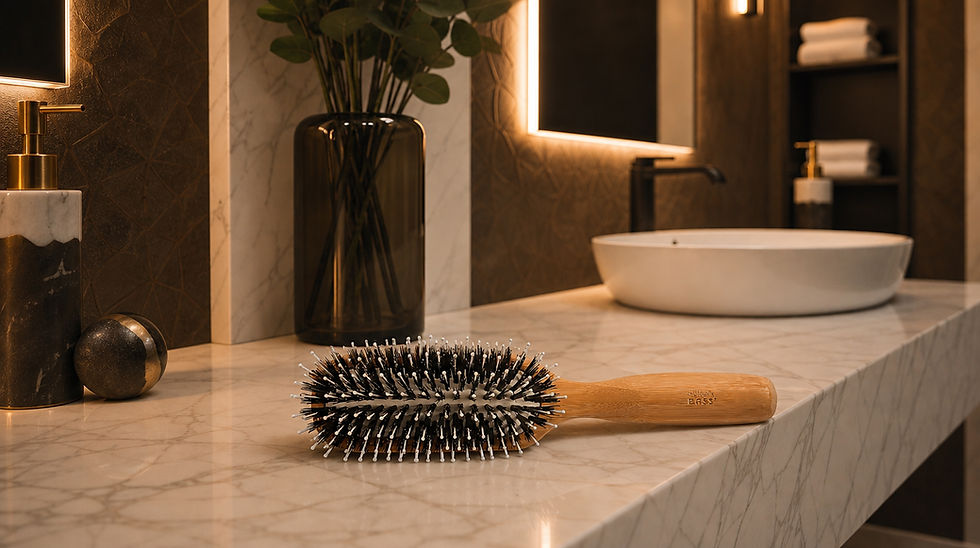
For a sensitive scalp, the most useful standard is therefore simple: use the least contact necessary for effective root access, and judge that contact by how it feels across the entire session. The goal is not maximum scalp engagement. It is controlled contact that remains comfortable.
Scalp Contact Is a Position, Not a Performance Target
Scalp contact enters boar-bristle brushing for a practical reason. Sebum is most available near the root area, so beginning near the roots gives the bristle field access to the place where natural oil first enters the hair. From there, the important movement is outward through the lengths, where the brush performs its Shine & Condition work by helping redistribute oil while smoothing and polishing the hair surface.
That does not mean the brush must be pressed into the scalp. Contact can be extremely light. The bristle tips may simply meet the scalp as the brush settles into position before moving through the section. The useful event is access to the root area, not the intensity of the sensation.
This distinction prevents a common misunderstanding: scalp contact is part of the pathway, not a separate benefit to maximize. A boar bristle brush is not more effective because the scalp feels more stimulated. If the contact becomes sharper, more forceful, or more persistent than the hair requires, the technique has moved beyond function and into unnecessary mechanical load.
Contact, Pressure, Friction, and Repetition Are Different Variables
A sensitive scalp often reacts to the total mechanical experience, yet that experience is made from several separate variables. Treating them as interchangeable makes it harder to understand why one brushing session feels comfortable and another does not.
Contact
Contact simply means that the bristle tips or bristle field meet the scalp. Contact can be barely noticeable or very distinct. The existence of contact alone does not tell you whether the technique is gentle or aggressive.
Pressure
Pressure is the force the hand transfers through the brush. As pressure increases, the bristles bend farther, the bristle field compresses more, and the tips engage the scalp more assertively. A sensitive scalp generally benefits from staying at the lowest pressure that still allows the brush to reach the root area and move through the hair cleanly.
Friction
Friction is created as the bristles move across the scalp and hair. A light pass can remain comfortable because the bristles meet an area and then move on. Short back-and-forth scrubbing concentrates movement in one place and can make a modest amount of pressure feel much more intense.
Repetition
Repetition adds mechanical exposure over time. A stroke that feels neutral once may feel irritating after many passes over the same path. That is why sensitive-scalp contact should be judged across the session rather than from the first stroke alone.
Together, these variables explain why “How hard should I press?” is only part of the question. The more useful question is: what combination of contact, force, movement, and repetition lets the brush reach the hair without asking the scalp to tolerate more than necessary?
The Contact Threshold: Present, Not Sharp
Appropriate scalp contact does not have one universal sensation because bristle firmness, density, length, brush construction, hair density, and individual tolerance all change how the brush meets the head. Still, useful contact usually has one recognizable quality: the bristles feel present, but not sharp.
The brush should settle into the root area without the hand bracing downward. The bristles should glide rather than scrape. The scalp should not feel raked, scratched, stung, or challenged. A person should not need to tolerate an unpleasant sensation because they assume the brush must be felt strongly to distribute oil.
The bristles also need room to flex. Driving the brush downward can compress the bristle field and change the experience from light surface engagement to force transfer. A lighter hand allows the bristles and brush base to behave as designed instead of turning the scalp into the surface against which the brush is pressed.
A practical self-check is to reduce downward force until the contact feels clearly comfortable, then make one deliberate pass. If the brush still engages the root area and travels smoothly through the hair, increasing pressure offers no obvious mechanical advantage.
Why Hair Density Can Make Contact Misleading
One of the easiest ways to misread scalp contact is to confuse poor penetration with insufficient pressure. In dense, thick, or long hair, the bristle field may ride on the outer layers. The user feels little scalp contact and concludes that the brush needs to be pressed harder.
That conclusion is often wrong. More force can compress the hair mass and increase scalp pressure without creating a cleaner pathway to the roots. Reducing the amount of hair in the brush path is usually more precise. Smaller sections allow the bristles to approach the root area with less resistance, which makes it easier to evaluate the contact itself rather than the force needed to overcome hair density.
The practical distinction is simple: if the brush cannot reach the scalp comfortably, the first question is not “How much harder should I press?” It is “Is the hair preventing the bristles from reaching where they need to go?”
Brush Design Changes the Feel of Contact, Not the Basic Rule
Brush construction changes how hand pressure is delivered, but it does not change the governing contact principle. A cushioned base can yield beneath the bristle field and make contact feel more adaptive, while a direct-set base creates a more immediate relationship between the hand and the bristles. Softer bristles bend sooner; firmer bristles resist more. Bristle length and density also affect how easily the field reaches through the hair.
Those variables matter because they change the sensation produced by the same hand pressure.
They do not create a universal ranking in which one construction is always correct for a sensitive scalp. For contact calibration, the practical question remains the same: can this brush reach the hair effectively while the scalp contact stays comfortable?
If a brush requires substantial downward force before it reaches the root area, or if it feels sharp even at very light pressure, the contact pattern may be a poor match for that combination of hair and scalp tolerance. The answer is not to train the scalp to accept stronger contact.
The Brush Can Still Be Useful Without Direct Scalp Contact
Direct scalp contact and useful boar-bristle brushing are not an all-or-nothing package. If the scalp is less tolerant on a particular day, the brush can begin slightly away from the skin and continue through the hair lengths.
That changes one part of the brushing pathway: the brush will pick up less newly available sebum directly from the scalp and immediate root area. But it can still redistribute oil already present in the hair, smooth the surface, align loose fibers, and polish the lengths.
This matters because it separates scalp tolerance from hair benefit. If direct contact requires discomfort, the brush does not have to be abandoned entirely. The scalp can be spared while the hair-length portion of the Shine & Condition function continues where it remains comfortable.
When Contact Should Stop Instead of Being Recalibrated
Contact calibration applies when the scalp is intact and the question is how much ordinary grooming pressure feels comfortable. It is not a method for brushing through pain, burning, sharp discomfort, bleeding, or clearly worsening irritation. If the brushing session itself produces those responses, stop the session rather than continuing to search for a slightly lighter pressure.
The same boundary applies when the scalp surface is already compromised. Do not run boar bristles directly over broken skin, open or raw areas, active bleeding, or painful lesions. If there are signs that raise concern for infection, or a painful or open skin problem is persistent or worsening, pause direct brushing and seek medical attention.
For boar-bristle grooming, the implication is narrow and mechanical: compromised skin is not a pressure-calibration problem. Do not try to solve it by pressing less and continuing. Avoid the affected area until ordinary grooming contact is appropriate again.
A Practical Contact-Calibration Test
To calibrate contact, begin at the light end rather than starting with a fixed amount of pressure. Use a small section of dry, already-detangled hair and place the brush near the roots with almost no deliberate downward push. Let the bristles meet the hair and scalp only as much as the weight of the brush and a relaxed hand naturally allow, then make one slow pass.
If the brush does not reach the root area, change the pathway before changing the pressure.
Make the section smaller and try again. If the bristles reach comfortably, keep that amount of force. If the contact feels pointed, scratchy, or abrasive, reduce pressure or slightly change the angle so the bristle field glides rather than points downward.
Then reassess after several passes rather than judging only the first stroke. If contact that began comfortably becomes increasingly tender, hot, scratchy, or irritating as the same area is revisited, repetition has become part of the problem. The useful pressure is not simply the pressure that feels acceptable once; it is the pressure-and-pass pattern that remains comfortable across the session.
Common Ways Scalp Contact Gets Misread
The first misreading is assuming that stronger sensation means better oil distribution. It does not.
Root access can occur with very light contact, and a stronger scalp sensation is not evidence of improved brushing performance.
The second is assuming that weak scalp sensation means the brush is not working. Hair density may be blocking penetration, or the bristle field may already be engaging the root area more lightly than expected. Sectioning reveals more about the problem than simply adding force.
The third is treating a scratchy sensation as a normal feature of boar bristle brushing. The bristles may be noticeable, but scratchiness is not a performance target.
The fourth is assuming that every finishing stroke must begin directly against the scalp. Once the root area has received enough comfortable contact, additional polishing can continue through the lengths without repeatedly re-engaging the skin.
The Governing Principle: Minimum Effective Contact
A boar bristle brush can touch the scalp. For many users, light contact is a normal part of beginning a root-to-length Shine & Condition pass. But contact is a means of reaching the hair, not an objective in itself.
The useful standard is minimum effective contact: enough access for the brush to engage the root area and begin its conditioning pathway, but no more pressure, friction, or repetition than the scalp comfortably tolerates. If the brush cannot reach without force, improve access. If the contact becomes sharp, reduce it. If direct contact is not comfortable, omit it. If brushing produces concerning symptoms or the scalp surface is compromised, stop or avoid contact rather than trying to optimize through it.
That is the distinction that matters most. Good boar-bristle contact should feel controlled, functional, and almost uneventful. The brush should serve the hair without asking the scalp to prove that it can endure the tool.
Frequently Asked Questions
Should boar bristles physically touch the scalp?
They can, when light contact is comfortable. Direct contact can help the brush engage the root area where sebum is concentrated, but the bristles do not need to be pressed firmly into the scalp.
How much pressure should I use?
Use the least pressure that allows the brush to reach the root area and move through the hair cleanly. If more force seems necessary, first check whether hair density or section size is blocking access.
What should appropriate scalp contact feel like?
The bristles may be noticeable, but the contact should feel present rather than sharp. It should glide without scraping, scratching, stinging, or requiring the hand to brace downward.
What if I can barely feel the brush on my scalp?
That is not automatically a problem. Strong sensation is not required for boar-bristle performance. If the brush is reaching the root area and moving smoothly through the hair, there is no reason to add pressure simply to make the contact more noticeable.
Can the brush still work if I avoid direct scalp contact?
Yes. It can still smooth, polish, and redistribute oil already present through dry, detangled hair. The tradeoff is reduced pickup of newly available sebum directly from the scalp and immediate root area.
How do I know if repeated passes are becoming too much?
If contact begins comfortably but the scalp becomes increasingly tender, scratchy, hot, or irritated as the same area is revisited, stop working that path. Repetition can raise mechanical intensity even when each individual stroke is light.
When should I stop direct scalp contact altogether?
Stop if brushing causes pain, burning, sharp discomfort, bleeding, or clearly worsening irritation.
Avoid direct brushing over broken, open, raw, bleeding, or painful areas rather than trying to solve the problem by using slightly less pressure.