How to Reassess Your Hairbrush When Hair Turns Gray or Changes with Age


Key Takeaways
Gray pigmentation alone does not require a new hairbrush; reassessment should begin when changes in hair behavior affect brushing comfort, efficiency, or results.
Evaluate your existing brush against its original function, whether detangling, surface refinement, or blow-dry shaping, before deciding if it remains suitable.
Recurring catching, scalp pulling, or disappointing results can indicate changes in hair condition, brush wear, or technique rather than an unsuitable brush.
Inspect the brush, observe where resistance occurs, and test one adjustment at a time, such as lighter pressure, smaller sections, or shorter strokes.
Retain a brush that still works, modify technique when effective, supplement it for a new function, or replace it when its original performance fails.
A hairbrush that has worked comfortably for years may gradually begin behaving differently. It catches where it once moved freely, requires additional passes to organize the hair, or leaves certain sections looking less controlled than before. Sometimes the difference appears as new gray growth emerges. In other cases, it develops alongside changes in hair length, density, texture, or condition.
The natural response may be to brush more firmly, spend longer on difficult areas, or assume that gray hair requires a different kind of brush. Yet none of these responses identifies what has actually changed.
A hairbrush can remain in excellent condition while becoming less effective for a particular task.
Equally, it may remain entirely suitable even when the hair has changed visibly. The challenge is distinguishing between a brush that no longer fits the job, a technique that needs adjustment, and hair conditions that cannot be corrected through brushing alone.
Gray hair and biologically aging hair are not the same condition. Graying reflects a reduction or loss of pigmentation within the hair fiber. It does not, by itself, establish whether the strand is coarse, fine, dry, resilient, or fragile. A person may develop extensive gray hair while retaining familiar texture and manageability.

Age-associated changes can involve different characteristics. Hair growth patterns, density, individual fiber dimensions, and other structural properties may change over time, although their nature and extent vary among individuals. Such changes can affect brushing even when pigmentation remains relatively unchanged. Previous chemical processing, accumulated surface wear, and changes in grooming preferences can influence performance independently of both graying and biological aging.
A visible change in hair color is a reason to observe, not an automatic reason to change brushes.
A change in how the hair responds to brushing provides the functional evidence that reassessment is needed.
The purpose of reassessment is to identify that evidence, determine its likely source, and make a proportionate adjustment.
Begin with the Brush's Original Function
Before evaluating whether a hairbrush still meets current needs, it is useful to establish what the brush was intended to accomplish.
Hairbrushes perform different mechanical functions. Their bristle or pin arrangements, working surfaces, and overall construction influence how they engage, separate, refine, or shape hair. A brush should therefore be assessed against the task it was selected to perform rather than against every possible grooming objective.
For everyday reassessment, three broad functional distinctions provide a useful reference.
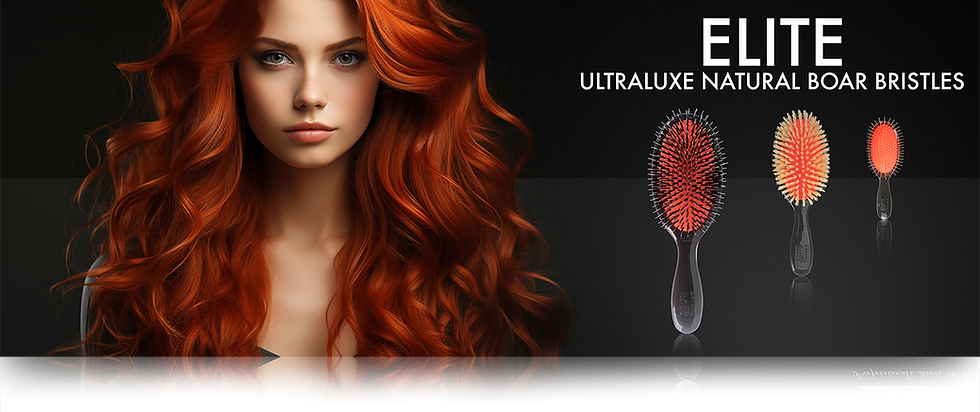
Boar-bristle brushes primarily support surface refinement, polishing, smoothing, and the distribution of natural scalp oils through appropriate sections of hair. Their dense natural bristles are not intended to replace a dedicated detangling function when substantial separation is required.
Pin brushes primarily support detangling, separation, directional control, and everyday brush-through management. Their pins engage and organize the hair more actively, making them useful when the principal task involves moving through sections and controlling their arrangement.
Round brushes primarily support shaping under airflow and controlled tension during blow-drying.
Their function is distinct from routine dry detangling or surface polishing, even though they may contribute to smoothing as part of a styling process.
These are functional distinctions rather than prescriptions for gray or aging hair. A person may use one brush or several, depending on the work required.
The initial reassessment question is therefore simple: What task does this brush normally perform, and is that task still necessary in the same form?
If a brush remains effective for its original purpose, a newly developed grooming requirement does not automatically make it unsuitable. Conversely, if its original function has become unnecessarily difficult to perform, the relationship between the tool and the hair deserves closer examination.
Why a Familiar Hairbrush May Begin Performing Differently
Every brushing movement involves contact between a tool and a collection of hair fibers. The brush's bristles or pins encounter strands, guide their movement, and transmit force through the hair.
How successfully this occurs depends on the brush's construction, the amount of hair engaged, the direction of movement, and the physical behavior of the fibers.
A brush selected for a previous combination of length, density, texture, and grooming needs may interact differently when any of those conditions changes.
For example, someone who has used the same brush throughout adulthood may begin noticing that shorter strands around the temples resist their customary brushing direction. The brush still organizes the longer sections comfortably, but repeated strokes across the shorter growth create unwanted separation or lift.
The established technique may simply be imposing a familiar movement on hair that now behaves differently.
Another person may experience increasing resistance near the ends while allowing previously colored hair to grow out naturally. The untreated gray roots move freely, while older, chemically processed lengths catch more readily. Although the difficulty appears during a transition to gray hair, it may arise primarily from differences in surface condition and processing history.
A third possibility concerns the brush itself. Years of use can leave pins distorted, bristles damaged, or contact surfaces worn. A tool that no longer provides smooth, consistent contact may create difficulty even when the hair has changed very little.
These situations establish four possible sources of a grooming problem: the condition of the brush, the characteristics of the hair, the technique being applied, and the function the brush is expected to perform.
Distinguishing among these possibilities prevents an unnecessary replacement decision and directs attention toward the source of the difficulty.
Identify the Signs That a Hairbrush May Need Reassessment
Before comparing different brushes, examine what the existing tool no longer accomplishes as efficiently or comfortably as it once did.
Three observations are especially informative: movement through the hair, comfort during contact, and the finished appearance.
Resistance and Catching During the Stroke
A brush that previously moved through a section without interruption may begin stopping, dragging, or catching individual strands.
Some resistance is normal when a brush engages and directs hair. The concern is unexpected or increasing resistance that prevents the intended movement.
When bristles or pins encounter a tangle, the brush's forward movement can concentrate tension among the fibers caught within it. Pulling harder increases the mechanical load without necessarily separating the obstruction. Hair that is already worn or compromised may be particularly vulnerable to additional stress.
The location of resistance offers important clues.
Catching concentrated at the ends may reflect accumulated surface wear, tangling, or a stroke that engages too much hair at once. Resistance near a particular growth area may reflect a different strand direction or texture. Difficulty throughout a section may indicate that the brush is encountering more friction or entanglement than the current movement can comfortably manage.
The important observation is not merely that the brush catches, but where the interruption occurs and whether it develops repeatedly under comparable conditions.
Changes in Scalp Contact and Pulling
A familiar brush may begin feeling different against the scalp.
Pressure that was previously comfortable may become unpleasant, or the movement may produce noticeable pulling in particular directions.
Changes in density can alter how much hair lies between the brush and the scalp, but reduced density does not automatically mean that the remaining strands are weak or that the scalp has become sensitive. A change in haircut may also create different angles of traction without altering the brush.
If lighter pressure, a different angle, or a smaller section eliminates discomfort, the original technique may have become unnecessarily demanding.
Persistent discomfort requires a closer examination of the brush's contact characteristics. Damaged pins, rough surfaces, deteriorated cushioning, or other structural defects can produce unpleasant contact even when the hair remains manageable.
Brushing should not continue through pain or significant pulling. Persistent scalp discomfort, inflammation, or unexplained hair loss warrants appropriate medical evaluation rather than repeated attempts to solve the problem through brush selection.
Changes in the Finished Appearance
A brush may move comfortably through the hair while no longer producing the desired appearance.
Perhaps the hair separates into smaller groups instead of settling smoothly, shorter strands become more noticeable, or repeated brushing leaves certain areas flatter than intended.
A newly emerging wave pattern may also change how hair responds to familiar directional movements.
In these situations, the brush is not necessarily encountering excessive mechanical resistance. It may be organizing the hair in a way that no longer supports the intended result.
This distinction separates a mechanical movement problem from an arrangement problem.
If the brush moves freely but the result is unsatisfactory, increasing pressure is unlikely to correct a pattern that repeated brushing is already disturbing. The direction, frequency, or purpose of the movement may need reconsideration.
Conduct a Controlled Hairbrush Reassessment
Once a recurring performance change has been identified, the next step is to determine whether the existing brush can still accomplish its intended function with an appropriate adjustment.
A useful assessment takes place during an ordinary grooming session, with the hair in a condition suitable for the brush being evaluated. Temporary influences such as unusual tangling, product buildup, or humidity should be considered before interpreting one difficult session as a permanent change.
Inspect the Brush Before Testing the Technique
Begin by examining the tool itself.
Accumulated hair and residue can interfere with contact. Bent pins, broken bristles, rough edges, or deteriorating cushioning may affect how the brush enters and moves through the hair.
Cleaning may resolve buildup-related interference, but it cannot restore damaged contact surfaces or worn structural components.
If the brush has defects that cause snagging or discomfort, replacement may be appropriate regardless of whether the hair has changed with age.
When the brush remains structurally sound, the assessment can proceed to its interaction with the hair.
Observe a Familiar Stroke Without Increasing Force
Begin with a manageable section that is appropriately prepared for the brush's intended use.
Move the brush with light, controlled pressure. Notice where it enters the hair, whether movement remains smooth, and whether the stroke achieves the intended grooming result.
If the brush catches, stop rather than pulling through.
Observe the point of interruption and the condition of the surrounding hair. A localized problem may require a different response from difficulty that occurs throughout ordinary brushing.
The purpose is observation, not a test of how much tension the hair can withstand.
Change One Aspect of Technique
When the brush is in good condition and the difficulty is manageable, introduce one adjustment.
Reducing section size decreases the amount of hair engaged simultaneously. Shortening the stroke limits how far fibers must travel while under brush control. Reducing pressure lowers contact force, while changing direction may avoid unnecessary traction against the hair's natural arrangement.
Each modification addresses a different source of mechanical demand.
The result should be evaluated against the original problem. An improvement in comfort is useful, but the brush must also continue accomplishing the intended grooming task.
A successful adjustment should make the task easier without creating new difficulties or requiring an elaborate series of compensations.
A Quick Reassessment Checklist
Use this sequence when an established hairbrush begins performing differently:
Identify the change. Is the problem catching, pulling, discomfort, excessive repetition, or an unsatisfactory finished result?
Locate the difficulty. Does it occur near the roots, through the lengths, at the ends, or only in particular sections?
Inspect the brush. Check for buildup, damaged contact points, or deteriorating components.
Test one technique adjustment. Reduce pressure, section size, stroke length, or unnecessary repetition as appropriate.
Evaluate the original function. Does the brush still accomplish its intended grooming task comfortably and efficiently?
Choose the response. Retain the brush, modify its use, supplement it with another function, or replace it when a genuine mismatch remains.
When an adjustment restores comfortable movement and the intended result during ordinary use, the assessment has accomplished its purpose.
Interpret What the Reassessment Reveals
The observations collected during brushing are most useful when interpreted as patterns rather than isolated events.
The nature and location of a persistent difficulty can indicate whether the existing brush needs a localized technique adjustment, a different role in the routine, or replacement.
When Brushing Requires Increasing Effort
A familiar grooming task may begin taking longer because the brush repeatedly catches, requires additional passes, or fails to organize the hair as expected.
If resistance decreases when smaller sections are used, the original brush may remain suitable with an adjusted technique.
If movement is comfortable but repeated passes do not improve the appearance, the grooming objective or sequence may need reconsideration.
Continually increasing the number of strokes is not an effective substitute for identifying the source of difficulty. Each additional pass introduces more contact and friction, particularly when the hair is already resisting movement.
When Difficulty Is Limited to Particular Areas
Hair characteristics do not necessarily change uniformly.
Different regions may have distinct growth directions, proportions of gray strands, lengths, or processing histories. A brush may continue working comfortably through the back of the hair while requiring a different approach near shorter strands around the face.
When the difficulty is localized, the first response should generally address that area rather than replace a brush that remains effective elsewhere.
For example, reducing the number of passes around shorter, differently directed growth may improve the finished appearance while allowing the usual brushing method to continue through longer sections.
When Additional Brushing Makes the Hair Less Organized
Shorter strands may lift away from surrounding hair, or a naturally grouped wave may become increasingly separated after repeated brush-through movements.
In these circumstances, the brush may have completed the necessary separation before the routine ends. Additional passes then disturb the arrangement rather than improve it.
The useful correction may be to stop earlier, change the direction of movement, or reduce brushing in areas that already appear satisfactory.
If the brush continues moving comfortably and achieves its intended function with fewer passes, replacement is unlikely to address the original problem.
Determine Whether the Grooming Function Has Changed
Technique adjustments are appropriate when the existing brush still serves the correct purpose.
They cannot fundamentally change the function for which the brush was designed.
A change in hair characteristics may introduce a new grooming requirement while leaving the original brush effective for its established task.
Consider a person who has long used a boar-bristle brush for surface refinement but now experiences more frequent tangling through the lengths. The brush may continue performing its polishing function successfully. The developing difficulty concerns preliminary separation, which may require attention before the boar-bristle brush is used.
The original tool has not necessarily failed. The routine has acquired an additional task.
A pin brush used for separation presents another possibility. If it continues organizing the hair comfortably but the user now wants a different finishing effect, the changed expectation should not be confused with a failure of the brush's detangling function.
Similarly, a round brush that remains effective during blow-drying can be retained for that purpose even when a shorter haircut makes it unnecessary during ordinary dry grooming.
These distinctions allow the original brush to be evaluated fairly. The question is whether it remains suitable for its assigned function, not whether it can perform every grooming task that develops as the hair changes.
Recognize When the Hair Itself Is the Principal Source of Difficulty
Hair fibers accumulate mechanical and environmental exposure as they grow. Older lengths generally experience more washing, brushing, styling, and environmental contact than newer portions near the scalp. Chemical treatments may introduce additional differences between sections.
These variations can influence how readily neighboring fibers slide past one another.
When surface irregularities increase friction, strands may catch or resist separation even if the same brush previously moved through them comfortably. Cuticle wear and other structural changes can contribute to this behavior, although brushing resistance alone cannot establish the microscopic condition of the fiber.
During a transition from colored hair to natural gray, newer untreated growth and older processed lengths may therefore behave differently.
The visible color transition can coincide with this difference without being its mechanical cause.
Biological aging may influence grooming through other pathways. A change in density, for instance, may alter how much hair lies between the brush and the scalp or how a finished hairstyle appears, even when the remaining fibers continue moving comfortably through the tool.
The reassessment must therefore distinguish among surface condition, growth characteristics, density, and pigmentation rather than treating them as equivalent features of mature hair.
Brush selection cannot restore lost follicles, reverse pigmentation loss, or biologically repair damaged fibers. Its role is to manage existing hair with appropriate mechanical control.
A Practical Example: Reassessing a Brush During a Gray-Hair Transition
Consider a person who has used the same everyday pin brush for several years and is now allowing previously colored hair to grow out naturally.
The individual notices increasing resistance near the ends and begins considering a replacement specifically marketed for gray hair.
An examination shows that the brush is structurally sound, without significant buildup or damaged contact points.
During ordinary brushing, it passes comfortably through newer growth near the scalp. Resistance appears primarily in older lengths that have experienced repeated chemical processing.
A smaller section and shorter, controlled strokes restore comfortable movement. The brush continues performing its separation and everyday organization functions effectively.
The evidence supports retaining the brush with a modified technique.
If the person later discovers that significant tangling requires a distinct preliminary task, another suitable tool may be introduced without discarding the original brush.
If ordinary grooming instead remains uncomfortable despite appropriate technique and a sound brush, the tool's suitability for its original function should be reconsidered.
The example illustrates why reassessment is not a predetermined path toward replacement. It is a method of allowing the observed difficulty to determine the appropriate response.
Make the Final Decision: Retain, Modify, Supplement, or Replace
The reassessment should now produce one of four practical outcomes.
Decision | Evidence supporting the decision |
Retain | The brush remains comfortable, effective, and appropriate for its original function without unnecessary force or repetition. |
Modify | A reasonable adjustment in pressure, section size, stroke length, direction, or frequency restores satisfactory performance. |
Supplement | The original brush still performs its function, but another distinct grooming task has become necessary. |
Replace | The brush is damaged or cannot perform its original task comfortably and effectively despite appropriate adjustments. |
When replacement is justified, the new brush should address the particular shortcoming identified during reassessment.
A brush that engages too much hair for comfortable control may call for a more appropriate level of engagement. Uncomfortable contact may require different contact characteristics. Inadequate separation or directional control may indicate that the present tool no longer supplies the function required.
The appropriate replacement cannot be determined from gray pigmentation or age alone. It must correct the observed mismatch.
This targeted approach preserves the distinction between reassessing an existing tool and beginning an entirely new hairbrush-selection process.
Reconsider the Routine Without Adding Unnecessary Complexity
A suitable brush can still occupy an unnecessary or poorly timed position in a grooming routine.
Habits often survive changes in haircut, natural texture, and styling preferences. Someone with shorter hair may continue using the long brushing sequence developed for a previous hairstyle.
Another person may repeatedly brush newly wavy sections in an effort to recreate an earlier, straighter appearance.
The reassessment should therefore consider whether each step still contributes to the intended result.
A preliminary separation step may become useful before finishing. A specialized styling brush may remain appropriate during blow-drying but unnecessary for ordinary dry grooming. A familiar finishing movement may require fewer passes because the desired arrangement is achieved more quickly.
Sometimes the best adjustment is to remove an unnecessary step rather than introduce another tool.
Moisture state remains relevant as well. A brush that performs successfully on dry hair should not automatically be assigned to wet detangling unless its design and intended technique are suitable for that purpose. Wet hair can respond differently to stretching and mechanical force, making the conditions of use part of the assessment.
The routine should reflect the functions actually required, performed in a sensible order and with no more manipulation than necessary.
When Should You Reassess Your Hairbrush Again?
Hairbrush reassessment does not require a fixed timetable based on age or the percentage of gray hair.
It is more useful to respond to meaningful changes in grooming conditions.
A substantial haircut, a change in chemical processing, recurring tangling, altered scalp comfort, or a sustained difference in grooming results may justify reviewing the brush and technique.
Changes in texture or density may also affect performance, although their significance depends on how the hair actually behaves during grooming.
Temporary variation should be interpreted cautiously. Humidity, product residue, or unusual tangling can affect a single session without establishing a lasting mismatch.
Once the brush and routine again provide comfortable movement and the intended result during ordinary use, reassessment is complete. Further changes are unnecessary unless another meaningful difference appears.
Conclusion: Let Present Performance Determine Continued Suitability
The appearance of gray hair and the gradual changes that may accompany aging can alter everyday grooming, but they do not automatically make a familiar hairbrush obsolete.
A useful reassessment begins by identifying the brush's original function, observing any change in performance, and determining whether the difficulty arises from the tool, the technique, the hair, or a newly required grooming task.
The outcome should be proportionate to the evidence. An effective brush can be retained, an established technique can be refined, a new function can be introduced when necessary, or an unsuitable tool can be replaced.
The appropriate hairbrush is not determined by how long someone has used it or how much gray hair has developed. Its suitability is demonstrated by how comfortably and effectively it performs the work required by the hair as it exists today.
Frequently Asked Questions
Does gray hair automatically require a different hairbrush?
No. Loss of pigmentation does not establish a particular strand thickness, texture, condition, or brushing requirement. A brush that continues performing comfortably and effectively may remain suitable regardless of how much gray hair has developed.
Is reassessing a brush for gray hair different from reassessing it for aging hair?
The method is the same, but the reasons for reassessment may differ. Visible graying alone does not establish a functional change. Age-associated differences in density, growth characteristics, or fiber behavior may alter brushing requirements independently of pigmentation. Actual performance determines whether an adjustment is necessary.
What should I check first when my hairbrush begins catching?
Identify where resistance occurs and inspect the brush for buildup or structural damage. Catching limited to particular lengths or sections may reflect local hair conditions or the way those sections are being engaged. Do not force the brush through the obstruction.
How can I tell whether I need a different brush or simply a different technique?
If a modest adjustment restores comfortable movement and the intended grooming result, the existing brush may remain suitable. If difficulty persists despite reasonable adjustments, or the routine now requires a function the brush was not designed to perform, a different tool may be appropriate.
What if my brush moves smoothly but my hair no longer looks the same afterward?
Smooth movement and satisfactory appearance are separate measures of performance. Changes in texture, length, or arrangement may mean that a former brushing direction or frequency no longer produces the desired result. Technique may need modification even when the brush remains mechanically suitable.
Why does my brush work near my gray roots but catch farther down?
Newer growth and older lengths may have different surface conditions or processing histories.
Older sections have experienced more environmental and grooming exposure, while chemical treatments may further influence their behavior. The location of resistance is more informative than the contrast in hair color alone.
Can I continue using the same brush if my hair becomes less dense?
Yes, provided contact remains comfortable and the brush continues performing its intended function. Reduced density may change scalp contact or the finished hairstyle's appearance, but it does not automatically require a different brush.
When should I supplement my brush rather than replace it?
Supplementation is appropriate when the existing brush still performs its primary task but another grooming function has become necessary. Replacement is more appropriate when the original brush cannot perform its intended task comfortably or effectively, or when its condition has deteriorated.
Should I replace a boar-bristle brush if my gray hair becomes more tangled?
Not necessarily. A boar-bristle brush used for surface refinement may continue performing that function well. Increased tangling may require a separate detangling step rather than greater pressure with the boar brush or automatic replacement.
How often should I reevaluate my brush as I get older?
Reassess when meaningful changes appear in brushing comfort, resistance, efficiency, or results, or when a haircut or grooming objective changes the task. No age-based replacement schedule is necessary when the existing brush continues working appropriately.