How to Brush Curly or Wavy Hair with a Boar Bristle Brush


This article expands on concepts from the broader textbook – “Boar Bristle Brushes: The Definitive Guide to Naturally Shiny, Conditioned Hair – A Comprehensive Hair Care Textbook by Bass Brushes.”
Key Takeaways
· Curly and wavy hair can use boar bristle brushing effectively when the goal is Shine & Condition support, not detangling.
· The brush should be used on dry or nearly dry, already ordered hair so texture is supported rather than accidentally disrupted.
· The intended finish matters, because preserving curl definition, softening waves, redirecting texture, or smoothing a gathered style require different brushing choices.
· Root access and complete root-to-end passes still matter because textured hair often hides dryness through the lengths and ends.
· Light pressure, sectioning, and restraint help the hair look calmer, more supported, and intentional without creating frizz or unwanted expansion.
Curly and wavy hair are often misunderstood in brushing conversations because people assume all brushing has the same purpose. In the Bass system, that is not true. A boar bristle brush belongs to the Shine & Condition category. Its purpose is to help redistribute the scalp’s natural oils through the lengths and refine the outer field of the hair into a calmer, more coherent condition. That purpose does not disappear when the hair is wavy or curly, but it does change how the brush should be used. Curly and wavy hair do not respond well to careless routine brushing that ignores texture pattern, dryness distribution, and the difference between detangling work and conditioning work. If a boar bristle brush is used as though it were a detangler or a general-purpose styling brush, the result is often frizz, disruption, or a shape that no longer looks intentional.
That distinction matters because curly and wavy hair often lives under two different pressures at once. On one side, it is more likely to show dryness through the lengths and ends because natural oil from the scalp has a longer, less direct journey through the bends of the shaft. On the other side, the pattern itself can be easily disturbed if brushing is done at the wrong stage or with the wrong goal. This is why many people either avoid brushing altogether or brush in ways that create more disorder than support. A boar bristle brush can be highly useful for curly or wavy hair, but only when the user understands what kind of result they are trying to create and when the hair is actually ready for Shine & Condition work.
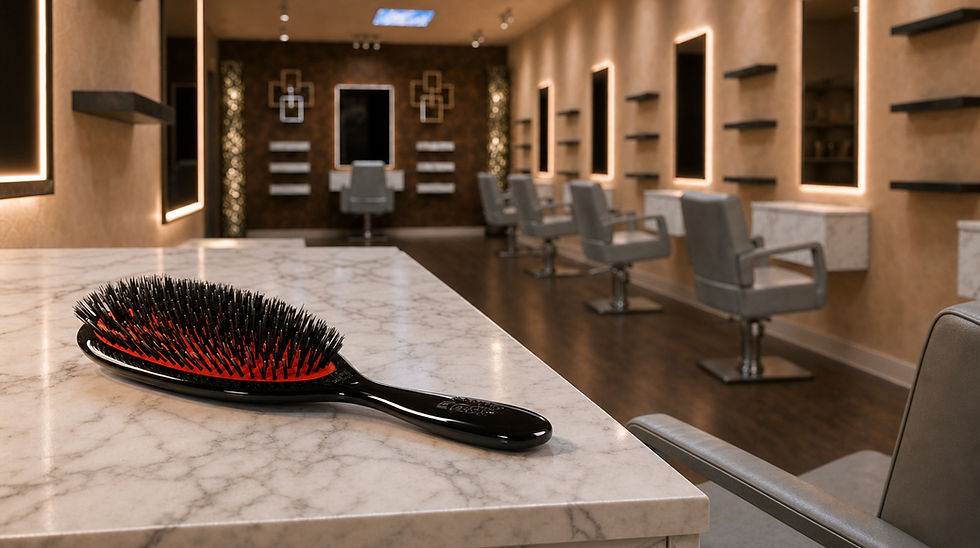
To brush curly or wavy hair properly with a boar bristle brush, the user has to understand that the brush is not there to force a curl pattern into submission, not there to detangle resistance, and not there to imitate a pin brush or a styling brush. It is there to support the hair by redistributing natural conditioning and refining the surface in a way that respects the texture pattern rather than blindly erasing it.
Why Curly and Wavy Hair Need Different Brushing Logic
Curly and wavy hair are not simply straighter hair with more bends. The pattern changes how the hair behaves under friction, how easily natural oil travels, how dryness shows itself, and how quickly the visible shape can be disturbed. In straighter hair, a root-to-end conditioning pathway is mechanically more direct. In curlier or wavier hair, that pathway is less automatic. The natural bends interrupt the easy travel of oil, which often means the lengths and ends stay drier even when the scalp is producing enough support.
This is one reason a boar bristle brush can be useful for these hair types. It helps move some of the conditioning farther through the shaft than it might travel on its own. But that same texture pattern also means the user has to be more careful about when and how the brush is used. A pattern that is beautiful in its formed state can become disrupted if the user brushes through it casually when it is not prepared for that kind of contact.
This is why curly and wavy hair require brushing logic, not just brushing willingness.
Why a Boar Bristle Brush Is Not a Detangling Tool for Curly or Wavy Hair
A boar bristle brush should not be used as a primary detangling tool for curly or wavy hair. This is true in general, but it matters even more in textured patterns because resistance in curly or wavy hair is often more structurally distributed through the bends of the shaft. If the brush is asked to separate caught strands, pull through knots, or force apart compacted sections, the result is usually drag, frizz, and disruption rather than support.
That is why any needed detangling must happen first with fingers, a comb, or a brush meant for detangling labor. The boar bristle brush can only do its real work once the hair is reasonably ordered. If the user skips that requirement, the category function collapses. The brush stops being a conditioning-distribution and surface-refining tool and becomes a resistance tool, which it is not built to be.
In Bass logic, this is not a small technicality. It is the difference between using the right tool for the right job and using the right tool in the wrong stage.
Why Curly and Wavy Hair Often Need the Brush Later, Not Earlier
A boar bristle brush often belongs later in the routine for curly or wavy hair because the pattern first has to be understood in its current state. Is the hair being worn in a more natural, defined way? Is it being stretched, softened, loosened, or gathered into a smoother shape? Is the goal to preserve pattern definition, to create a brushed-out finish, or to refine the surface of a gathered style? These questions matter because a boar bristle brush does not create the same visual outcome in textured hair that it creates in straighter hair.
If the hair is still in an active detangling stage, still wet and unstable, or still being set into its intended pattern, then the brush often enters too early. But once the hair is reasonably ordered and the user knows what the intended finish is, the boar bristle brush can become very useful. It can redistribute support, calm frizz-prone roughness, soften a too-dry outer field, and help certain shapes look more intentional.
This is why the brush is often less about early-stage control and more about support, finishing, or reshaping with intention.
Why Dry or Nearly Dry Hair Is Usually Best
A boar bristle brush generally works best on dry or nearly dry hair, and this is especially important in curly or wavy hair. When the hair is wet, the pattern is more vulnerable, the shaft is less stable, and the user cannot read honestly whether the brush is supporting the texture or simply disturbing it.
Wet curly or wavy hair may move under the brush, but that does not mean the movement is useful.
Dry or nearly dry hair makes the routine more truthful. The user can see whether the surface is rough, whether the lengths look under-conditioned, whether the pattern is being respected, and whether the brush is helping create the intended finish. Natural oil also moves more meaningfully in this state, which is central to why a boar bristle brush helps at all.
This is why a boar bristle brush usually belongs after the hair is stable enough for real Shine & Condition work, not in the middle of a wet texture-management phase.
Why the Goal Determines Whether the Brush Is Appropriate
Curly and wavy hair can be brushed with a boar bristle brush, but the goal has to be clear. If the goal is to preserve every individual curl clump in a freshly defined state, a boar bristle brush is often not the right immediate tool for that moment. If the goal is to soften the surface, redistribute conditioning, calm dryness, support a brushed-out wave pattern, refine a gathered shape, or create a smoother natural look, then the brush may be extremely useful.
This is why the question is not simply whether curly or wavy hair can use a boar bristle brush.
better question is for what result. A user who wants airy, brushed-out softness is asking something different from a user who wants strong definition preservation. A user who wants to smooth the crown into a low bun is asking something different from a user who wants loose curls to remain sharply separated. The brush belongs more naturally to the first kind of task than the second.
The tool is not wrong for textured hair. It is wrong only when the intended outcome and the category function are mismatched.
Why Root Access Still Matters in Textured Hair
Even in wavy or curly hair, the conditioning source still begins at the scalp. That means the brush still has to begin meaningfully at the root area if the user wants real Shine & Condition support. It is tempting to avoid the root area because textured hair often looks driest through the lengths and ends, but the support has to begin where it originates.
This does not mean aggressive root brushing. It means honest root engagement. The brush must meet the scalp-origin zone clearly enough to begin gathering and moving natural oil through the shaft. If the user only brushes the lower half, the routine becomes cosmetic smoothing without true redistribution.
In Bass logic, curly and wavy hair do not change the source. They change how carefully the route has to be handled.
Why the Root-to-End Pass Must Respect the Pattern
A complete pass still matters in textured hair, but the user has to understand what that pass is meant to do. It is not meant to pretend the curl or wave pattern does not exist. It is meant to bring support through the full route of the hair. In some routines, this may mean fewer, more deliberate passes rather than many repetitive ones. The user may be supporting the pattern while slightly loosening it, or supporting the hair for a gathered or brushed-out finish rather than preserving the exact original formation.
This is why root-to-end honesty is still essential. The lower lengths and ends are often the most under-conditioned part of textured hair. If the pass dies in the mid-lengths, the driest part of the shaft still gets left behind. But the pass should remain controlled and intentional so the texture is not mindlessly overworked.
The route must be complete, but the intent must stay respectful.
Why Pattern Disruption and Pattern Redirection Are Not the Same
Many people fear boar bristle brushes on curly or wavy hair because they have seen or experienced pattern disruption. That concern is understandable, but it helps to distinguish disruption from redirection. Disruption is careless brushing that creates frizz, roughness, and visual confusion because the brush is being used in the wrong stage or with the wrong goal. Redirection is a controlled choice to soften, loosen, gather, or refine the pattern into another intended finish.
A boar bristle brush can absolutely redirect texture. It can help turn tighter surface disorder into a calmer brushed wave, help gather the hair into a smoother low ponytail or bun, or help make a natural pattern look less dry and more coherent. What it should not do is accidentally destroy a pattern the user was trying to preserve.
This is why intentionality matters so much. Textured hair can tolerate redirection far better than it tolerates accidental disruption.
Why Looser Waves and Curlier Patterns May Use the Brush Differently
Looser waves often tolerate surface redirection more visibly and more easily. A boar bristle brush may help connect the wave field, reduce frizz, and create a brushed, glossy softness without making the result look inherently wrong for the texture. Curlier patterns usually ask for more restraint.
The brush may still be very useful, but more often for support brushing, redistributing oil, refining the outer field, calming dryness, or gathering the hair into a deliberate shape rather than for preserving sharp loose-definition while brushing through the whole field.
This does not mean curlier hair cannot use the brush. It means the likely finish outcome changes as the pattern becomes more pronounced. The tighter or more structured the pattern, the more important it becomes to know whether the user wants preservation, softening, or redirection before the brush enters.
The tighter the pattern, the more intentional the finish choice needs to be.
Why Gathered Styles Are Often a Very Natural Use for the Brush
One of the most practical uses of a boar bristle brush on curly or wavy hair is in gathered styles. If the goal is a smooth ponytail, low bun, crown refinement, or a more controlled outer surface while the texture is being directed into shape, the brush often becomes especially useful. In these situations, the user is not trying to preserve every loose curl separation across the full field. They are using the brush to redistribute support, calm the outer layer, and help the gathered result look more intentional and less dry or fuzzy.
This is one reason some textured-hair users think they “cannot” use a boar bristle brush when the real issue is only that they were imagining the wrong use case. The brush may be less appropriate for one finish goal and highly appropriate for another. Gathered looks often match the category function extremely well because the surface refinement and root-origin conditioning both support the final shape.
Why Sectioning Often Helps Curly or Wavy Hair
Sectioning is often one of the smartest ways to use a boar bristle brush on textured hair because curly and wavy patterns can hide dryness and uneven support beneath the outer surface. The top may respond quickly while the deeper field remains rougher or less supported. In long, thick, dense, or layered textured hair, this is especially common.
Sectioning reduces the working field and lets the brush begin at the scalp and continue through the shaft more honestly. It also reduces the chance that the user will overwork the top of the head while the inner lengths remain under-supported. This matters because textured hair often punishes surface-only routines more visibly. The outside may look smoother for a moment, but the deeper field soon influences the visible shape again.
Sectioning does not have to turn the routine into an elaborate production. It simply makes the support more truthful.
Why Pressure Must Stay Light
Pressure mistakes are especially costly in curly or wavy hair because too much force does not just flatten the roots. It can also roughen the pattern, increase frizz, and create a finish that looks stressed rather than supported. A boar bristle brush should feel controlled and present, not aggressive. The contact should be enough to engage the root area and guide the outer field, but not so strong that the hair is being bullied into compliance.
If the user feels the need to push hard, the routine is usually wrong upstream. The hair may still need detangling, the section may be too large, or the desired finish may not match what the brush is actually meant to do. Pressure is not a substitute for correct sequencing.
Textured hair responds best when the brush feels deliberate, not forceful.
Why Textured Hair Often Benefits Strongly from Better Distribution
Curly and wavy hair often show the benefits of better oil distribution very clearly because these hair types commonly struggle with dryness through the lengths and ends. The scalp may be producing enough natural support, but the shape of the shaft makes it harder for that support to travel on its own. A boar bristle brush helps bridge that distance. The result is often not only more shine, but a calmer feel, less roughness, and a surface that looks less thirsty.
This is one reason textured hair does not need less Shine & Condition logic. In many cases it needs more. The route just has to be handled more carefully so the support reaches the pattern without carelessly destroying it.
How to Know the Brush Is Helping Instead of Hurting
A boar bristle brush is helping curly or wavy hair when the result looks calmer, more supported, and more intentional rather than more frizzy, flattened, or confused. The surface should look less rough. The lengths and ends should feel less under-conditioned. The pattern may be softer or somewhat redirected depending on the goal, but it should not look accidentally broken apart.
If the hair becomes puffier in a dry, disorderly way, the brush probably entered too early, met too much resistance, or was used with too much force. If the roots become too flat and the lower pattern still looks unsupported, the routine may be overworking the top and underdelivering through the shaft. If the result looks more coherent and the hair feels more balanced from scalp to ends, the tool is being used intelligently.
The right result is not always tighter definition. It is better-supported texture.
Conclusion
To brush curly or wavy hair with a boar bristle brush, the first thing to understand is that the tool belongs to the Shine & Condition category, not the detangling category. It is there to redistribute natural scalp oils, refine the outer field, and support the hair from roots to ends. That means the hair must be reasonably ordered first, dry or nearly dry, and brushed with a clear goal in mind.
The user should know whether they are preserving pattern, softening it, redirecting it, or gathering it into a smoother shape.
That is why the routine depends on sequence and intent. The brush should begin at the root area, continue honestly through the shaft, and remain light in pressure. When the hair can hide incomplete work, sectioning should be used. The user should judge success not by whether the pattern stayed frozen exactly as it was before, but by whether the hair looks calmer, more supported, and more coherent in the finish they actually wanted.
In the Bass system, that is what makes boar bristle brushing intelligent for curly or wavy hair. It does not deny the texture. It works with the truth of the texture and the truth of the tool.
FAQ
Can curly or wavy hair use a boar bristle brush?
Yes. Curly and wavy hair can use a boar bristle brush very effectively when the goal is Shine &
Condition work rather than detangling.
Should you detangle curly or wavy hair before using a boar bristle brush?
Yes. A boar bristle brush is not a primary detangling tool. The hair should be reasonably ordered first.
Should you use a boar bristle brush on wet or dry curly hair?
Usually on dry or nearly dry hair. That state allows more honest support, oil distribution, and surface refinement.
Will a boar bristle brush ruin curls?
It can disrupt the pattern if used carelessly, too early, or for the wrong goal. But when used intentionally, it can support the hair, soften or redirect the pattern, and improve dryness without simply ruining it.
Should the brush still start at the scalp on curly or wavy hair?
Yes. The conditioning source still begins at the scalp, so root access still matters.
Should the pass still go from roots to ends on textured hair?
Yes. The complete route still matters because the lengths and ends are often the most under-conditioned part of curly or wavy hair.
Is sectioning useful for curly or wavy hair with a boar bristle brush?
Often yes, especially when the hair is long, thick, dense, or layered enough to hide incomplete work.
How hard should you brush curly or wavy hair with a boar bristle brush?
Use light, controlled pressure. Too much force usually creates frizz, flattening, or disruption rather than better support.
Can a boar bristle brush help dry curly ends?
Yes. That is one of its most useful roles. It can help move natural support farther into the lengths and tips.
How do you use a boar bristle brush for a gathered curly or wavy style?
Use it to refine the outer field, redistribute support, and guide the surface into the gathered shape with light pressure. In this kind of style, the brush is helping create a smoother, more intentional finish rather than preserving every loose pattern separation.
How do you choose between preserving the pattern and redirecting it?
Start by deciding what finish you actually want. If you want strong definition preservation, the brush may have a smaller role or a later role. If you want softness, a brushed-out wave, a calmer halo, or a gathered finish, redirection may be the correct goal.
How do you know if the brush is helping curly or wavy hair?
The hair should look calmer, feel more supported, and reflect the intended finish more clearly rather than becoming rougher, frizzier, or more confused.