Bamboo, Wood, Alloy, and Nylon - How Pin Materials Change Styling, Detangling, and Control

Updated: Jun 14


This article expands on concepts from the broader textbook – “Style & Detangle Hairbrushes: The Definitive Guide to Hair Order, Control, and Everyday Readiness. – A Comprehensive Hair Care Textbook by Bass Brushes.”
Key Takeaways
· Pin material affects how a brush behaves under force, especially how it bends, grips, maintains tension, and supports control during repeated passes.
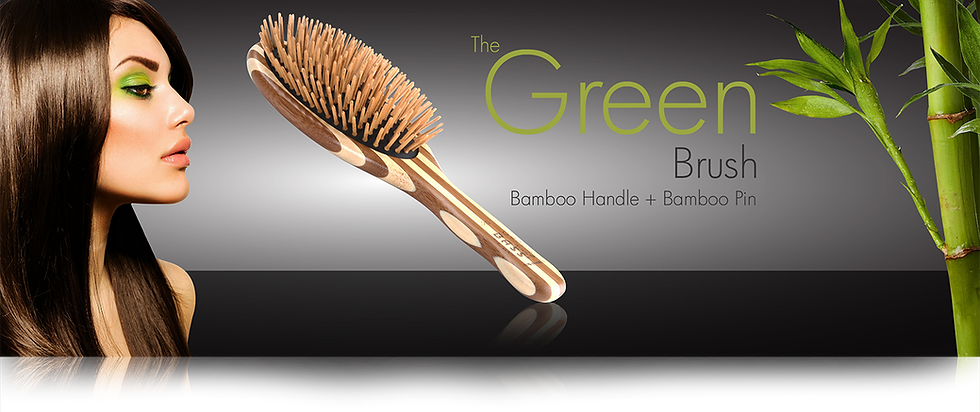
· Bamboo and wood pins provide controlled rigidity with moderated friction, making them useful for smoothing, shaping, and guiding airflow without harsh drag.
· Alloy pins offer deeper engagement and precise structural control, especially for dense or high-volume hair that needs stronger directional influence.
· Nylon performs differently depending on its form: bristle tufts refine the surface, structured pins support styling, and flexible pins prioritize comfort detangling.
· Heat compatibility depends less on whether a material is heat-safe and more on whether the pins maintain geometry and tension during blow-dry styling.
A Style & Detangle Core Lesson by Bass Brushes,
Hairbrush materials are often described as if they are symbols.
Bamboo is called natural. Wood is called traditional. Alloy is called professional. Nylon is called flexible, synthetic, or gentle. Those descriptions may be familiar, but they are incomplete. In the
Style & Detangle system, the important question is not what a material represents. The important question is how that material behaves when it meets hair under force.
Hair does not respond to material labels.
It responds to friction, tension, pressure, heat, airflow, repetition, and structural engagement. The pin material helps determine how those forces reach the hair. It affects whether a pin bends or holds its path, whether it creates controlled friction or harsh drag, whether it maintains tension under airflow, whether it reaches deeper into dense hair, whether it supports surface refinement, and whether it releases resistance or preserves control.
That is why pin material matters.
A brush made with bamboo pins, wood pins, alloy pins, structured nylon pins, flexible nylon pins, or nylon bristle tufts will not behave the same simply because all of them are “brush materials.”
Each material form creates a different interaction between the hand, the brush, the scalp, and the hair fiber.
In the Style & Detangle category, these differences are not decorative. They determine function.
Some materials support comfort-first detangling.Some materials support styling control.Some materials support deeper engagement.Some materials support surface refinement.Some materials hold up under airflow and heat.Some materials release tension the moment resistance appears.
None of these roles is automatically superior. The right material depends on the task.
This lesson explains how bamboo, wood, alloy, and nylon change styling, detangling, and control; why nylon must be understood as several different behaviors rather than one material category; how material affects heat and airflow performance; and why a brush should be judged by mechanical response rather than by natural-versus-synthetic assumptions.
For the complete system-level explanation of pin brush behavior, detangling logic, styling control, material design, cushion response, scalp feel, daily manageability, and long-term routine value, this lesson connects upward to the larger textbook article: Style & Detangle Hairbrushes: A
Definitive Textbook on Hair Order, Control, and Everyday Readiness.
Material Choice Is Mechanical, Not Symbolic
The first mistake in understanding brush materials is treating them as identity markers.
Natural does not automatically mean better. Synthetic does not automatically mean lesser. Metal does not automatically mean harsh. Flexible does not automatically mean gentle in every situation.
Firm does not automatically mean damaging. These shortcuts oversimplify how brushes actually work.
Material choice is mechanical.
A pin material affects how much the pin bends, how quickly it rebounds, how much friction it introduces, how well it maintains tension, how stable it remains under heat, how deeply it engages, and how predictably it behaves over repeated passes.
These are the questions that matter:
Does the pin hold its shape under pressure? Does it bend away when it meets resistance? Does it guide hair without excessive drag? Does it remain stable during blow-drying? Does it reach the hair mass or only skim the surface? Does it help the hair settle into alignment? Does it support detangling, styling control, or finishing?
The material is valuable only insofar as it helps answer the functional need.
This is especially important for Style & Detangle because the category lives between simple resistance release and more advanced styling control. A Style & Detangle brush must support detangling, but it should not collapse into detangling only. It must create enough engagement to organize the hair after resistance begins to release.
Material determines whether that engagement is possible.
Bamboo and Wood Pins: Controlled Rigidity With Moderated Friction
Bamboo and wood pins are useful because they offer a balanced form of rigidity.
They resist bending under normal brushing pressure, which allows them to maintain engagement with the hair across repeated strokes. That stability helps the brush sustain tension. And sustained tension is necessary for styling preparation, smoothing direction, and guiding hair into alignment.
At the same time, bamboo and wood do not usually behave like slick, frictionless materials. Their surface character can create moderated friction: enough contact to help guide the hair, but not so much that the brush feels abrasive when properly finished and used correctly.
This balance makes bamboo and wood pins valuable in Style & Detangle brushes.
They can help smooth and direct hair. They can help establish movement and structure. They can support controlled brushing during airflow. They can help the hair respond to repeated direction. They can provide styling control without relying on excessive force.
Their value is not that they are natural in a symbolic sense. Their value is that they provide stable, usable, moderate mechanical behavior.
Bamboo and wood pins are especially useful when the goal is everyday order: guiding hair into a calmer direction, helping sections behave more predictably, and preparing the hair for further styling. They can also support blow-dry guidance when the brush construction is designed for that use, because they do not collapse the way highly flexible pins may collapse under airflow and section resistance.
Still, bamboo and wood are not magic materials. Their performance depends on finish, spacing, pin length, cushion response, handle control, and technique. A poorly finished pin can feel uncomfortable. A section that is too tangled may still resist. A brush used with too much pressure can still create stress.
Bamboo and wood pins work best when they are understood as controlled styling materials, not as all-purpose answers.
Why Bamboo and Wood Are Not Just “Natural” Choices
Natural material language can be useful, but it can also distract from performance.
A bamboo or wood pin is not valuable simply because it comes from a natural source. It is valuable because it can produce a specific brushing behavior: stable engagement with moderated friction.
That distinction matters for Bass content because material comparison should never become superiority language. The point is not to say that bamboo or wood is better than nylon, alloy, or any other material. The point is to explain what bamboo and wood are suited to do.
In Style & Detangle, bamboo and wood belong where the brush needs control without unnecessary harshness. They help preserve direction. They support repeated strokes. They can assist with smoothing and shaping during airflow. They often feel grounded and stable in use because the pins do not yield too easily.
But if the primary task is very gentle resistance release through heavy knots, a more flexible pin system may be better at the first stage. If the hair is very dense and needs deeper structural engagement, alloy or high-rigidity structured nylon may be more appropriate. If the goal is surface refinement rather than deeper control, nylon bristle tufts may play a supporting role.
This is the real lesson: bamboo and wood are not universal. They are purposeful.
They belong where balanced rigidity, moderated friction, and steady directional control are needed.
Alloy Pins: Precision, Depth, and Structural Control
Alloy pins create a different kind of brushing interaction.
They are generally more rigid than bamboo or wood and can maintain very consistent geometry under load. This makes them useful when the brush needs to reach deeper into the hair mass and preserve precise direction under pressure.
Dense, thick, or high-volume hair often requires this kind of engagement. Surface contact may polish or tidy the outer layer, but it may not influence the structure underneath. If the brush cannot reach or maintain its path through the section, the inner hair remains disorganized even when the top layer appears smoother.
Alloy pins can help solve that problem when properly designed.
Their rigidity allows the brush to maintain a clear path. Their stability can support directional control during repeated strokes. Their structure can help guide hair under airflow. Their depth of engagement can make them useful where a softer or more yielding pin would bend away before influencing the section.
However, alloy pins should not be understood as comfort-first detangling tools.
Their value lies in control, precision, and structural engagement. They are suited to situations where the hair needs a stronger organizing signal. They should not be forced through heavy tangles or used as a substitute for careful detangling technique.
Tip design is especially important with alloy pins. Because the shaft of the pin maintains structure, comfort must be managed at the point of contact. Rounded tips, ball tips, radius tips, smooth finishing, appropriate spacing, and responsive cushioning all help the pin deliver control without unnecessary scalp irritation.
Alloy pins show an important principle: rigidity itself is not the problem. Poorly managed rigidity is the problem.
When the pin is properly designed and used correctly, structural control can be comfortable, precise, and highly useful.
Alloy Is About Control, Not Aggression
Alloy pins can be misunderstood because metal is often associated with hardness.
But hardness is not the same as harshness. A well-designed alloy pin system is not meant to scrape, attack, or overpower the hair. It is meant to preserve geometry under conditions where softer materials may not maintain enough engagement.
This is why alloy pins can be valuable in Style & Detangle.
They can help dense hair respond to brushing. They can support more precise directional control.
They can maintain contact while airflow moves through the section. They can help the brush act on more than the surface layer.
But alloy requires respect for technique.
If the user presses too hard, works through sections that are too large, or begins too high on tangled hair, the brush may feel aggressive. That does not mean alloy is inherently wrong. It means the material is being used without the sequencing and pressure awareness it requires.
For dense hair, high-volume hair, or styling that requires deeper engagement, alloy can be a powerful material choice. For fragile hair, sensitive scalps, or early-stage detangling through high resistance, a gentler or more flexible first step may be appropriate.
Again, the question is not which material is best.
The question is which material behavior matches the task.
Nylon Is Not One Material Behavior
Nylon is often discussed as if it means one thing.
It does not.
Nylon can appear in a brush as highly flexible detangling pins, structured styling-capable pins, fine bristle tufts, or other engineered forms. Each behaves differently. Treating all nylon as one category creates confusion.
A highly flexible nylon pin may bend quickly when it meets resistance. This can be useful for comfort-first detangling.
A structured nylon pin may hold its shape under pressure and maintain enough tension to support styling preparation.
A nylon bristle tuft may interact more with the surface of the hair, supporting polish, alignment, and finishing rather than deep detangling.
All three may be nylon. But they do not do the same job.
This is why saying “nylon is flexible” or “nylon is synthetic” is not enough. The material’s form, stiffness, diameter, density, arrangement, finishing, and brush construction determine its real
behavior.
In Style & Detangle, nylon must be judged by what it does under force.
Does it collapse? Does it rebound? Does it maintain tension? Does it reach the hair mass? Does it smooth the surface? Does it support airflow? Does it prioritize comfort, control, or finishing?
The answer depends on the type of nylon structure used.
Nylon Bristle Tufts: Surface Refinement and Alignment
Nylon bristle tufts are different from nylon pins.
A tuft is made of fine, grouped synthetic filaments. Instead of entering deeply into the hair mass like a pin, it usually works closer to the surface. Its role is not primary detangling. Its role is surface refinement.
Nylon bristle tufts can help guide surface alignment, smooth visible texture, refine the outer layer, and contribute to a more polished finish. In styling brushes, they may be paired with pins to support consistency as shape forms. The pins provide structure and engagement; the bristle tufts help refine the surface behavior of the hair.
This matters because not every useful brush component has the same job.
A pin may detangle, guide, penetrate, or maintain tension. A bristle tuft may refine, smooth, and polish. When these elements work together, the brush can support both control and finish.
But nylon bristle tufts should not be mistaken for deep detangling tools. If the hair is knotted, compressed, dense, or resistant, a surface-refining tuft cannot release all that resistance alone. It may improve visible smoothness, but it does not replace a pin system designed for separation and control.
In the Style & Detangle system, nylon bristle tufts are supporting refiners. They help the finish look cleaner after the structural work has begun.
Structured Nylon Pins: Styling-Capable Synthetic Control
Structured nylon pins are nylon pins designed to hold shape.
Unlike highly flexible detangling pins, structured nylon pins can maintain enough rigidity to guide hair under pressure. When properly designed, they can sustain tension, support alignment, and remain stable during repeated strokes or airflow.
This makes them styling-capable.
Structured nylon is useful because it can be manufactured with high consistency. Pin shape, spacing, stiffness, and finish can be repeated predictably. That predictability can create reliable brush behavior when the goal is controlled styling preparation or directional brushing.
From a mechanical standpoint, a structured nylon pin may function similarly to bamboo, wood, or alloy if it maintains geometry under load. The differences come from surface feel, flexibility tolerance, weight, heat behavior, friction level, and how the pin is arranged in the brush.
Structured nylon should not be dismissed simply because it is synthetic. Synthetic materials can be durable, precise, consistent, and well suited to specific functions when designed correctly.
The same principle used across Bass descriptions applies here: when synthetic materials are used, their value should be discussed through performance, durability, consistency, and long-lasting function rather than unsupported claims.
Structured nylon belongs in Style & Detangle when the brush must preserve control, repeatability, and tension without relying on natural material behavior.
Flexible Nylon Pins: Comfort-First Detangling
Flexible nylon pins serve a different purpose.
They are designed to bend significantly when they meet resistance. This can reduce pulling and make detangling more comfortable, especially when the hair is wet, fragile, highly tangled, or sensitive at the scalp.
That flexibility is useful. It allows the brush to surrender force rather than transfer it fully into the hair.
For early-stage detangling, that can be exactly what the user needs.
But flexibility also has a limit.
When pins bend away, tension is released. When tension is released, directional control is weakened. The hair may separate, but it is not being strongly guided into alignment. The brush may feel comfortable, but it may not create a polished or controlled result.
This is why a brush dominated by highly flexible nylon pins is usually better understood as a detangling tool, not a styling brush.
That does not make it inferior. It makes it specialized.
Flexible nylon pins are valuable for quick release, gentle separation, wet detangling, sensitive scalps, and lower-stress brushing. But when the task changes from release to control, the brush may need more structure. That may mean structured nylon, bamboo, wood, alloy, or a different brush design altogether.
In Style & Detangle, comfort matters. But comfort alone does not create styling control.
Material Behavior Under Heat and Airflow
Heat and airflow reveal whether a brush material can maintain control.
When hair is warm and drying, it becomes more responsive to direction. But heat does not create direction by itself. Airflow does not create shape by itself. The brush must hold the hair in a controlled path long enough for that direction to be reinforced.
If the pins collapse under airflow, the hair may dry faster, but it will not be guided effectively.
This is why material behavior matters more than simple heat-safe language. A brush may tolerate heat physically, but the more important question is whether it can maintain geometry while heat and airflow are present.
Bamboo, wood, alloy, and structured nylon can all support styling when they hold engagement under drying conditions. Highly flexible nylon pins usually behave differently. They may release resistance well, but they often yield before enough tension can be sustained.
The issue is not whether one material survives heat. The issue is whether it performs its mechanical role while heat is acting on the hair.
In Style & Detangle, a material used during drying must be stable enough to guide. If it cannot guide, it may still be useful for detangling, but it should not be expected to create the same styling result.
No Material Is Universally Better
No pin material is universally better.
Each solves a different problem.
Bamboo and wood offer balanced rigidity with moderated friction. Alloy offers precision, deeper engagement, and strong structural control. Nylon bristle tufts support surface refinement and finish. Structured nylon pins offer consistent synthetic styling capability. Flexible nylon pins prioritize comfort-first detangling and resistance release.
The problem begins when those roles are confused.
A user may expect flexible nylon pins to create smooth blow-dry control and be disappointed when the brush only releases tangles. Another user may force a rigid pin system through knots and assume the brush is harsh. Another may choose a material for symbolic reasons without understanding whether it suits the task.
Material choice becomes logical when it begins with function.
Need gentle resistance release? Flexible nylon may be appropriate. Need daily directional control? Bamboo, wood, or structured nylon may be appropriate. Need deeper engagement in dense hair? Alloy or high-rigidity structured nylon may be appropriate. Need surface refinement after structure has been created? Nylon bristle tufts may help. Need barrel-based curl, bend, lift, or round-brush form? That belongs more directly to Straighten & Curl logic.
The right material is the one whose behavior matches the brushing problem.
Material, Design, and Technique Work Together
Material alone does not determine brush performance.
A bamboo pin can be useful or uncomfortable depending on finish, spacing, length, cushion response, and technique. An alloy pin can provide precise control or feel too strong depending on tip design and pressure. A nylon pin can detangle gently or style effectively depending on whether it is flexible or structured. A bristle tuft can refine the surface but cannot replace deeper engagement.
Material is one part of a system.
Spacing determines how much hair the brush gathers. Density determines how much contact occurs. Geometry determines how the pin field enters and moves through the hair. Cushioning determines how pressure is absorbed. Tip design determines scalp feel. Handle control determines how much force the user naturally applies.
Technique completes the system.
A structured pin brush works better when hair is sectioned appropriately. A flexible detangler works better when used to release resistance rather than force shape. Alloy pins work better when not rushed through heavy tangles. Bamboo and wood pins work best when allowed to guide rather than pry.
This is why Style & Detangle education cannot stop at material names. The material tells part of the story. Design and technique determine how that story plays out in real use.
How to Read Material Behavior in Use
A user can often understand material behavior by observing the result.
If the brush bends away from resistance and leaves the hair free of knots but still directionless, the material system may be prioritizing detangling over styling.
If the brush maintains contact and hair begins to align over repeated strokes, the material is supporting control.
If the brush feels firm but the hair becomes more organized without sharp pulling, the rigidity is productive.
If the brush feels harsh, snags, or creates scalp discomfort, the section may be too large, the pressure too high, the hair too tangled, or the material/design combination too strong for that stage.
If the hair dries puffy during blow-drying, the brush may not be holding enough tension under airflow.
If the surface looks smoother but the inner hair remains disorganized, the brush may be refining the canopy more than engaging the full hair mass.
This kind of observation matters because it prevents emotional brush selection. The user does not need to decide that one material is good and another is bad. The user can ask a more useful question: what did this material behavior allow the brush to do?
That question leads to better choices, better technique, and more consistent outcomes.
How This Fits the Bass Functional System
This article belongs inside Style & Detangle because pin material is central to how a brush detangles, organizes, and styles.
Pin materials affect whether the brush releases resistance, maintains tension, guides direction, supports airflow, reaches deeper layers, or refines the surface. These are Style & Detangle questions. They are about daily manageability, directional control, styling preparation, and brush-through organization.
This should not be confused with Shine & Condition. Boar bristle brushes serve a different function: natural oil distribution, polishing, finishing, surface refinement, and shine support.
It should also not be confused with Straighten & Curl. Round brushes use barrel diameter, airflow, tension, and direction to create curl, bend, lift, smoothing, or straighter-line effects during blow-drying.
Style & Detangle sits between those systems. Its material choices help hair move from resistance toward order. When the pin material can maintain engagement, the brush can guide. When it releases too quickly, the brush detangles but may not style. When it becomes too rigid for the stage, technique must adjust.
The role of material is to support the brush’s function, not to make one category replace another.
Conclusion: Material Is Behavior
Bamboo, wood, alloy, and nylon change how a brush performs because they change how force
is delivered to the hair.
Bamboo and wood provide controlled rigidity with moderated friction. Alloy provides precision, depth, and structural control. Nylon bristle tufts support surface refinement. Structured nylon pins provide consistent synthetic styling capability. Flexible nylon pins prioritize comfort-first detangling.
Each material form has value when used for the right task.
The mistake is asking one material to solve every problem. A flexible nylon detangler should not be expected to behave like a structured styling brush. An alloy pin system should not be forced through knots as if it were a soft release tool. A nylon bristle tuft should not be judged like a deep detangler. A bamboo or wood pin should not be chosen only because it sounds natural.
In Style & Detangle, material is not identity. It is behavior.
A good brush material is one that supports the function the hair actually needs: release, control, direction, airflow guidance, surface refinement, or preparation for shaping.
When that is understood, brush selection becomes clearer. The user stops asking which material is best and starts asking which material behavior belongs to the task.
Frequently Asked Questions
Why does pin material matter in a hairbrush?
Pin material affects how the brush behaves under force. It influences flexibility, rigidity, friction, tension, heat response, airflow guidance, scalp feel, and how well the brush can detangle, organize, or style hair.
Is brush material mainly about natural versus synthetic?
No. Natural versus synthetic language is incomplete. The more important question is how the material behaves mechanically: whether it bends, holds tension, creates controlled friction, maintains geometry, or releases resistance.
Are bamboo pins good for styling?
Bamboo pins can be useful for styling preparation because they provide controlled rigidity with moderated friction. They help guide hair without collapsing too easily.
Are wood pins good for detangling and styling?
Wood pins can support both detangling and styling preparation when hair is free enough to move. They provide stable engagement and moderated friction, but they should not be forced through heavy tangles.
Are bamboo and wood pins better than nylon?
Not universally. Bamboo and wood are useful for balanced rigidity and directional control. Nylon can behave in several ways depending on its structure. Flexible nylon is useful for comfort detangling, while structured nylon can support styling control.
What are alloy pins best for?
Alloy pins are best for precision, deeper engagement, and structural control. They are especially useful when dense or high-volume hair needs more than surface contact.
Are alloy pins harsh?
Not inherently. Alloy pins are more rigid, so tip design, spacing, cushion response, and technique matter. Properly finished alloy pins can provide control without unnecessary scalp discomfort.
Are alloy pins good for thick or dense hair?
Yes, when properly designed. Their rigidity and depth of engagement can help reach into dense hair and provide more structural control than surface-level contact alone.
Is nylon always flexible?
No. Nylon can appear as flexible detangling pins, structured styling-capable pins, or fine bristle tufts. Each behaves differently.
What are flexible nylon pins best for?
Flexible nylon pins are best for comfort-first detangling, sensitive scalps, wet or fragile hair, and lower-stress resistance release.
Why do flexible nylon pins sometimes fail at styling?
They bend away when they meet resistance, which releases tension. Without maintained tension, the brush may separate hair but fail to guide it into alignment or control.
What are structured nylon pins?
Structured nylon pins are synthetic pins designed to maintain shape under pressure. They can support tension, direction, and styling preparation when the brush is properly designed.
What do nylon bristle tufts do?
Nylon bristle tufts refine surface texture, guide surface alignment, and support polish. They are not primary deep-detangling tools, but they can support finishing within a styling system.
Which material is best for blow-drying?
Materials that maintain geometry under airflow are most useful for blow-drying guidance. Bamboo, wood, alloy, and structured nylon can all support this when used in appropriate brush designs.
Highly flexible nylon may dry hair but often does not control it strongly.
Does heat-safe mean styling-capable?
Not necessarily. A brush may tolerate heat physically without maintaining enough tension to guide hair. Styling depends on whether the pins hold engagement while heat and airflow act on the hair.
Which material is best for gentle detangling?
Flexible nylon is often useful for gentle resistance release because it bends when it meets tangles.
The tradeoff is that it may not provide enough structure for styling control.
Which material gives the most control?
Alloy and high-rigidity structured nylon often provide strong control because they maintain geometry under load. Bamboo and wood offer balanced control with moderated friction.
Can one material do everything?
No single material is best for every task. Each material behavior supports a different function: release, control, deeper engagement, surface refinement, or airflow guidance.
How should I choose between pin materials?
Start with the task. Choose flexible nylon for comfort-first detangling, bamboo or wood for balanced directional control, alloy or high-rigidity structured nylon for deeper engagement, and nylon bristle tufts for surface refinement.
What is the main takeaway?
Material is behavior. In Style & Detangle brushes, bamboo, wood, alloy, and nylon matter because they change how the brush delivers force, maintains tension, releases resistance, supports airflow, and guides hair into order.